
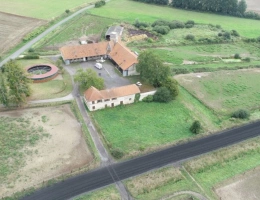
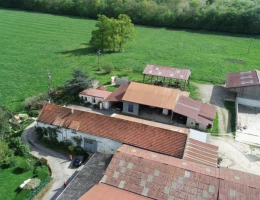
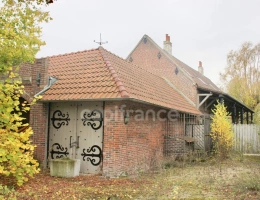
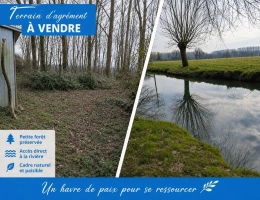
A sheep farm for sale in Hauts-de-France, as listed here, is a working unit with its ewes, its livestock building and its grassland — not an old sheepfold converted into a home. In a region dominated by arable cropping, flocks occupy well-defined places: the hedged country of the north-east, the coast and its salt marshes, and the slopes and wet meadows that cannot be ploughed. The offers gathered on this page come from farmers handing over, from firms specialising in rural property and from notaries, and state the flock, the land and the orientation of the unit. They sit alongside the sheep farms for sale across the country.
Here you will find what it takes to judge an offer: the level of land prices across the region, the departments and districts where units come free, the points to examine on the buildings and the formalities to anticipate before signature. For a setting-up project, our white paper « Créer une exploitation agricole » (in French) covers funding, qualifications and timing.
Land weighs heavily on the budget for a sheep farm. Transfers published by the French tax authorities (DVF, excluding vineyards) put the median for farmland in Hauts-de-France at €7,976/ha in 2025, with an average of €8,940/ha over 1,365 sales. Eight transactions in ten settle between €6,000 and €14,000/ha, where the national median is €5,307/ha.
A second reference, the SAFER land value benchmark, sets vacant land and pasture at €10,890/ha for 2025, -0.5% in a year and +9.4% over a decade; the French average is €6,460/ha, and a sitting tenant costs a plot roughly 17% of its value.
What makes a regional sheepfold and its holding valuable goes well beyond the area. Wintering capacity, lambing pens, the handling race, haymaking machinery, the length and condition of fencing, the quality of the flock and the strength of the outlets all count, whether the lambs go to a quality label, a producers' shop or a partner butcher. Before putting a figure on anything, open our land price observatory, then our financial calculators.
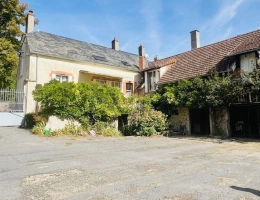
Buildings found in the region vary widely: long purpose-built sheep houses, former cattle byres turned into straw-bedded pens, storage barns adapted over the years. Inspection covers ventilation, the volume under the frame, ease of bedding and mucking out, the space available for lambing pens and the presence of a handling race and a loading dock. Hay and straw storage on site, automatic watering and lorry access weigh on working comfort as much as on the asking price. A damp, poorly ventilated building, or one too low for machinery, costs less to buy and more to put right.
Flocks are mainly suckler, turned towards lamb production, with lowland breeds and terminal crosses; the Boulonnaise breed, native to the coastal area, survives in limited numbers. The buyer looks at the lambing rhythm, health status, whether the flock is housed or rotationally grazed, and how batches are sold. Where the sale brings together house, buildings and land, insist on three separate valuations: close to large urban centres, residential value often pulls the overall figure upward while saying nothing about how the unit performs.
The Pas-de-Calais (62) is the department most marked by sheep farming: the Boulonnais offers dense hedged grassland, slopes and coastal pasture, while the Artois and the Ternois keep meadows among the ploughed land. The Nord (59) has two faces: the Avesnois, a country of grass and hedges where flocks sit beside cattle, and inland Flanders, heavily cropped, where sheep mainly use leftover parcels. In both departments demand for land is strong and complete farmsteads sell quickly.
The Somme (80) owes its sheep reputation to the Baie de Somme, where flocks graze salt marsh under a protected designation of origin, a very particular system resting on regulated grazing rights rather than on ownership alone. Elsewhere in the department, the Ponthieu and the Vimeu keep valley grassland, while the Santerre, given over to industrial crops, leaves little room for grass. A holding offered on this coast therefore calls for close checking of what is actually transferred: flock, buildings, but also real access to the grazed areas.
The Aisne (02) reads from north to south: the Thiérache, damp hedged grassland, holds most of the flocks and offers farms at contained price levels; the Laonnois, the Soissonnais and the Tardenois tip towards arable, where sheep use slopes, margins and cover crops. The Oise (60) combines the cropped Picardy plateau, the grassy Pays de Bray to the west and the Valois to the south under heavy suburban pressure: land is dear and available area scarce there, but proximity to the Paris region makes direct selling and conservation grazing easier to develop than elsewhere.
A mild maritime climate and regular rainfall lengthen the grazing season, which cuts the need for conserved forage compared with more continental regions. That advantage is paid for elsewhere: heavier parasite pressure, ground that carries stock for a shorter autumn, valley parcels that can flood. On the coast, grazing salt marsh follows its own rules, with authorised periods, stocking limits and the constraint of the tides; it is nothing like ordinary grazing and calls for experience the departing farmer should pass on.
Otherwise, management turns on rotational grazing, sound fencing and water on every block. Shearing, parasite control and foot care set the rhythm of the year, while wool brings little return. Organic flocks, or those under a quality label, carry a set of rules the buyer must be able to meet from day one, with no settling-in period.
In a region where land is sought after, access to it is the first obstacle. A takeover is subject to the structures control, the French authorisation required above certain thresholds, and SAFER, the rural land agency, may pre-empt the sale. Since a large share of the area is farmed under tenancy, check the validity of the rural leases, their expiry, the landlord's agreement and the reality of the grazing agreements announced, particularly on the coast and on ground managed by local authorities or conservation bodies.
Then check flock identification, disease testing results and the health status of the ewes, followed by the regime applying to the building: departmental health regulations or the classified installations rules, depending on numbers and distance to dwellings. The transfer of basic payment entitlements, the eligibility of each block and entitlement to the ewe premium are all prepared before signature. In suburban districts, make sure the buildings remain assigned to agricultural use in the local planning document.
The properties shown come from private vendors, from estate agencies specialising in rural property and from notarial offices across the five departments. Sort by area, by budget or by type of flock, set up an alert to follow new entries, and carry your search on to every farms for sale in Hauts-de-France.