
A dairy farm for sale in Provence-Alpes-Côte d'Azur is a rare find, and that scarcity is part of what makes it worth pursuing. Cow's milk holds a limited place in this southern French region, concentrated in the alpine valleys and high plateaux, while the rest of the territory leans towards vines, orchards, irrigated crops and sheep. The properties presented here come from farmers stepping back, from firms specialising in rural land and from mountain notary offices; they state altitude, forage area, grazing rights and the milking equipment in place. Every dairy farms for sale listing across France can also be browsed separately.
This page adds what the listings do not show: the value of land and grassland by sector, the departments where cattle herds survive, the condition of mountain buildings, and the checks specific to upland livestock farming. If you are working towards setting up, our white paper « Créer une exploitation agricole » (in French) maps out the route in detail.
Pricing the land comes first in any plan to buy a dairy farm. On the basis of 2025 DVF sales (vineyards excluded), the median in Provence-Alpes-Côte d'Azur works out at €13,518/ha and the average at €14,884/ha, across 59 transactions. The central range covering 80% of sales runs from €5,947 to €23,101/ha; nationally the median is €5,307/ha.
The SAFER benchmark, the market's second yardstick, gives €12,260/ha in 2025 for vacant land and pasture (+2.8% over twelve months, +12.5% over ten years), beside a national €6,460/ha; tenanted land is worth about 17% less.
Beyond hectares, what you are paying for here is forage self-sufficiency and water: irrigated meadows, an attached mountain pasture, and the capacity to build hay stocks for a long winter. Then comes the plant: housing suited to the climate, milking parlour or robot, bulk tank, manure pad and slurry store, hay storage, and the dairy herd with its replacement heifers. A cheesemaking workshop with an established customer base changes the reading of an asking price entirely. To compare, consult our land price observatory and our financial calculators.
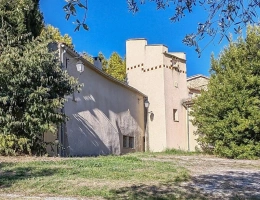
Livestock buildings here are designed for snow and wind: reinforced frames, volumes sometimes constrained by slope, and access that should be assessed in winter conditions. You will find loose housing on straw yards, a few cubicle sheds in the more recent units, and tie-stall barns still working in valley farms. The milking block is often modest by western French standards, which is not in itself a fault if the plant is sound: check the vacuum pump, the milk line, the condition of the bulk tank and the reliability of the electricity supply, which matters at altitude. Montbéliarde and Abondance cattle are the most common breeds, ahead of Prim'Holstein.
Forage area governs everything else. Count the irrigated hay meadows, the rough grazing, the summer pasture rights and the logistics they imply, because a herd that goes up the mountain in summer needs buildings, labour and equipment to match. Where a property comes with a farmhouse, the residential share of the price is often high: a stone farmstead in a tourist area is valued on the character-property market, not on farming fundamentals. Insist on an explicit split between the house, the production unit, the machinery, the livestock and the stocks.
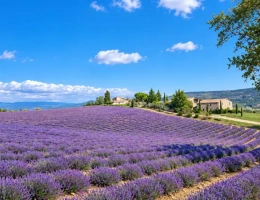
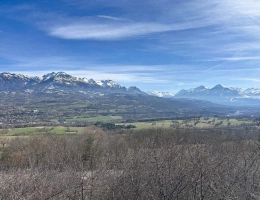
Hautes-Alpes (05) holds most of the region's cow's milk production: the Champsaur, the Valgaudemar, the Gap area and the edges of the Dévoluy combine hay meadows, mountain pastures and a local dairy cooperative that collects and processes on site. This is where working holdings most often come onto the market. Alpes-de-Haute-Provence (04) is more contrasted: livestock farming dominates in the Ubaye, the Blanche valley and the north of the department, but it is mainly sheep, while the Valensole plateau and the lower Durance turn towards crops and lavender. Cattle herds there are scattered rather than clustered.
Alpes-Maritimes (06) splits sharply between a built-up coast, where farmland has become almost impossible to find, and an inland backcountry of valleys, the Vésubie, the Tinée and the upper Nice hinterland, where mountain livestock farming survives. Cow's milk remains a minority there against goats and sheep, but the immediate proximity of a large population makes direct selling unusually profitable. Var (83) follows a similar logic: the coast and the wine plains leave little space, while the Haut-Var, around the Verdon and the inland plateaux, keeps extensive grazing in which a dairy cattle unit is the exception rather than the rule.
Bouches-du-Rhône (13) works to a different model: the Crau and its irrigated meadows produce a renowned hay that feeds livestock across the region and well beyond, yet dairy herds are few and competition for land, between urban growth, logistics and crops, is intense. Vaucluse (84), built around vines, orchards and market gardening, only exceptionally offers a dairy unit to take over, and then mostly on the slopes of Mont Ventoux and the Sault plateau. Across the region as a whole, it pays to follow several departments at once and to accept a wide search perimeter.
Water is the first thing to investigate. Establish what irrigation rights attach to the parcels, whether they run through a canal or a growers' association, how the rota works, what the charges are, and how secure the resource is in a dry summer. A hay meadow without irrigation simply does not yield the same tonnage, and the value of the holding reflects that. Then examine the grazing agreements and leases covering mountain pasture, often signed with a commune or a pastoral group: renewal is not automatic, yet the summer forage balance depends on it entirely.
The rest falls under general French farming law, with local twists. Depending on herd size the unit is a classified installation, requiring declaration, registration or authorisation, with the change of operator notified to the prefecture. Rural leases continue with the buyer subject to the landlord's agreement, and the transaction passes through the structures control, the French authorisation regime for taking over farmland, and through SAFER. In mountain areas the natural handicap compensation allowance, basic payment entitlements and agri-environmental schemes make up a meaningful share of income: confirm how each one transfers before completion.
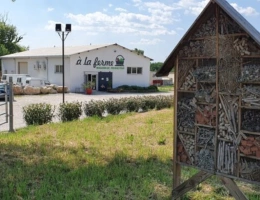
Milk collection is thin across the region: in several sectors no tanker round reaches the farm at all, which naturally pushes production towards on-farm cheesemaking. A good share of the holdings that come up for sale therefore include a dairy workshop, a ripening cellar and a health approval. Check that the premises comply, look at the state of the pasteurising or raw-milk equipment, and measure cellar capacity, because these determine the volume you can actually add value to far more than the number of cubicles in the shed.
The tourist market is the territory's strongest card: markets, producer shops, restaurants and summer visitor numbers sustain retail prices few other regions allow. That commercial goodwill, with its customer base, market pitches and reputation, is valued independently of the buildings and the land. A holding organised this way also demands seasonal labour and a constant selling presence: weigh that workload before committing, and arrange a period of support from the seller.
The properties circulated here come from retiring owners, rural estate agencies and notaries based in Provence and the southern Alps. Select by altitude, forage area or the presence of a processing workshop, switch on an alert so no dairy holding slips past you, then continue towards every farm for sale in Provence-Alpes-Côte d'Azur.