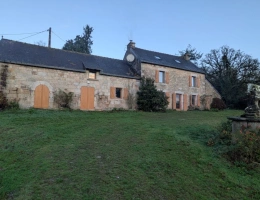
Looking for a dairy farm for sale in Morbihan takes you inland, where livestock still shapes the countryside: reorganised hedgerow farmland, grass and maize, Prim'Holstein herds sometimes crossbred, and often a pig or poultry unit alongside the milk. These are technical holdings, backed by cooperatives and dairies of western France. The market runs on retirements with no successor and on farmers narrowing their activity; the particulars give the forage area, the milking equipment and the volume delivered. Such holdings appear in the national selection of dairy farms for sale.
Here you will read what a listing leaves unsaid: the level of land values in Morbihan, the districts where supply renews itself, a method for judging housing, a milking block and a field layout, and the regulatory duties to anticipate well before an offer is made. Our white paper « Créer une exploitation agricole » (in French) speaks instead to those building a setting-up project.
Pricing the land comes first in any plan to buy a dairy farm. On the basis of 2025 DVF sales (vineyards excluded), the median in Morbihan (56) works out at €5,507/ha and the average at €5,980/ha, across 293 transactions. The central range covering 80% of sales runs from €3,748 to €9,162/ha; nationally the median is €5,307/ha.
The SAFER benchmark, the market's second yardstick, gives €5,360/ha in 2025 for vacant land and pasture (+3.7% over twelve months, +26.4% over ten years), beside a national €6,460/ha; tenanted land is worth about 17% less.
The price of a Morbihan holding is rarely explained by area alone. It rests on the shed and its lying comfort, the age of the robot or parlour, the tank and its cooling, the clamps, the muck pad and slurry store, the herd and its heifers, how compact the fields are around the buildings, and the strength of the milk contract. To place each of those items, open our land price observatory and test your takeover plan with the financial calculators.
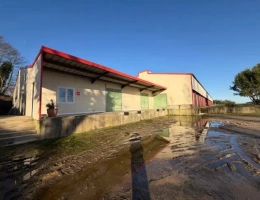
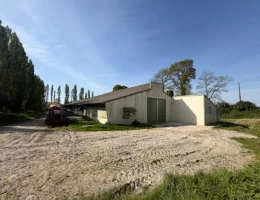
Most housing in Morbihan takes the form of cubicle sheds clad in timber or steel, with a straw yard for calving and a storage barn alongside. Inspection covers the floor and its grip, the scraping system, summer ventilation, watering, the number of places genuinely available and whether effluent storage matches the herd on the register. The milking block deserves its own assessment: the robot and its age, or the parlour and its throughput, the plate cooler, the wash unit and the dairy room. A well-sized set of buildings recently brought up to date limits the spending needed in the first year.
Herd, forage stocks and machinery are priced separately from buildings and land. As many farms are run through a company, the sale often takes the form of buying into the capital rather than a direct purchase: the accounts, the annual loan repayments and the commitments to the cooperative then become the central documents. If the dwelling is included, have it valued on its own, because its market has nothing to do with that of the farming unit.
Central Brittany, around Pontivy, Baud, Locminé and the Josselin country, holds most of the dairy units and lies close to collection and feed sites. The Ploërmel country and the eastern edges facing Ille-et-Vilaine offer fairly large structures on reorganised fields. To the north, towards Guémené-sur-Scorff and the Pourlet country, holdings are smaller and grass more present. The Vannetais, the landes de Lanvaux and the Redon country complete the picture, while the coast and the Rhuys peninsula have almost no farmland left available.
The rule is straightforward: the further you move from the gulf and the tourist routes, the more complete units you meet and the more pasture stays within reach. Around the towns and along the shore, competition from housing schemes regularly diverts farmsteads from their original use, and the few agricultural units that do come free usually go to neighbours already established there.
Brittany's blanket classification as a nitrate vulnerable zone governs the analysis: storage capacity, spreading plan, application calendar and the ground that can genuinely be spread on must all be checked with the paperwork in hand. Depending on herd size, the holding falls under declaration, registration or authorisation as a classified installation; the receipt and the order in force state the maximum herd allowed, which caps any prospect of expansion. On a mixed holding, each enterprise must be examined in its own right, biosecurity rules included.
Land calls for the same care as elsewhere in Brittany: a high proportion of rented ground, rural leases that continue, an authorisation to farm issued under the structures control and a possible pre-emption by SAFER. Check as well what becomes of the contracted volume with the dairy, the basic payment entitlements and, where an organic conversion is under way, the date on which the conversion period ends.
The listings gathered on this page come from retiring farmers, from rural property agencies and from notaries based in the department. Refine by district, acreage or milking equipment, then save an alert so that a sale does not pass you by. Your search can then open out to every dairy farms for sale in Brittany.