

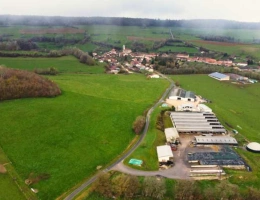
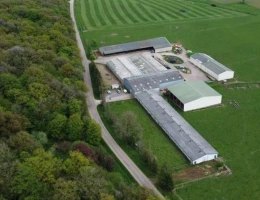
A dog kennel for sale in Moselle suits buyers aiming at a busy market: the department lines up the Metz conurbation, the Thionville corridor, the former coal basin and a rural hinterland running from the Saulnois to the northern Vosges. What is on the market ranges from recent premises purpose-built for boarding to converted Lorraine farms, by way of small breeding units passing on their stock. Sellers are managers handing over, rural property agencies and notaries; they state the licensed headcount, the detail of the buildings and what the goodwill contains. To compare beyond the department, see our dog kennels and boarding businesses for sale.
What follows covers the value of rural property in Moselle, the areas that generate the most bookings, the technical points that separate a well-designed kennel from a building needing work, and the permits to demand before making an offer. If you are starting a business rather than buying one, the white paper « Créer une exploitation agricole » (in French) reviews legal forms and financing.
In most sales the dwelling house is the largest single item, ahead of the kennel buildings and the goodwill. Transaction data is not published for this department (Alsace-Moselle land register), so the figures below are those of the Grand Est region. According to our country house observatory, the median price of a house in a rural commune in the region stood at €150,000 in 2025 (+4.2% year on year), or €1,400/m² of living space, across 7,885 recorded sales. The national median is €189,200.
Here land never explains the gap between two businesses on its own: what counts first is licensed capacity, the acoustic treatment of the buildings, the number of runs, the extent of the exercise paddocks, and whether a laundry and an isolation section exist. The goodwill then weighs in through its regular customers, its records, holiday bookings already taken and the standing earned with local vets. Place the property component with our country house price observatory and test your structure in our financial calculators.
In a department where houses are never far away, acoustics count as a buying criterion in their own right: absorbent cladding, an insulated roof, solid doors, and runs laid out on the side away from the neighbours. The rest is inspected as anywhere: an impervious floor that disinfects easily, drainage properly connected, partitions solid to bedding height, heating and ventilation suited to Lorraine winters. Exercise paddocks are judged on drainage, on the height of the fence and how far it is buried, and on the shade available. A laundry, a treatment room and a quarantine space complete the kit expected of a working business.
Packages here almost always include a dwelling house, which makes a split of the price between home, working buildings, land and goodwill essential. Where a cattery trades next to the dog side, value it in isolation: quiet rooms, secure access, vertical fittings. Do not forget to price the vehicles, the transport crates and the online booking software, often tied to a website whose transfer needs to be arranged along with the customer database.
Metz and its ring provide the base of bookings, extended along the Moselle corridor to Thionville and the Fensch and Orne valleys. The north of the department lives largely on jobs in Luxembourg, and that daily commuting feeds weekday boarding demand, steadier than holiday stays. To the east, Forbach, Saint-Avold and Sarreguemines add a large population and constant exchange with the Saarland. The Saulnois, the Bitche country and the Sarrebourg area offer the opposite: roomy properties and affordable land, with customers to be sought further afield and a longer run-in before a takeover pays.
Being near a junction or a main road matters more than the commune itself, so settled are travel habits in this department. Ask the seller where the customers come from, what share work across the border, and how short daytime stays and long holiday bookings divide across the year. Cross-border customers keep occupancy up out of season, but they expect early morning and late evening handovers, which shapes how the working day is organised.
Moselle comes under the local law of Alsace-Moselle: property rights are published through the livre foncier, a land register kept by a dedicated judge, which changes the timetable and the checks a notary carries out. On the trading side, require the declaration registered with the departmental veterinary and consumer protection service and the ACACED certificate of competence of the person in charge of the animals. Beyond nine weaned dogs the premises fall under classified installations rules, by declaration or authorisation: read the order that applies, its noise and effluent requirements, and prepare the notification of the change of operator.
In a built-up department, distance from housing and noise decide long-term viability. Check the planning zone, the history of complaints and whether acoustic or planted screens can be added. The handover itself is usually arranged as a sale of the business, with the price held in escrow, employment contracts transferred and the treatment of booking deposits already paid by customers settled in the contract. Ask the notary to spell out how the deal meshes with the land register before signing.
These listings are published by managers selling direct, by rural estate agencies and by notaries based in the department. Select your budget, the capacity you are after and the area, then create an alert to follow every new business coming to market. To open the field, browse dog kennels for sale in Grand Est.


