

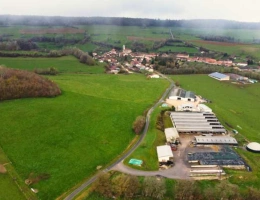
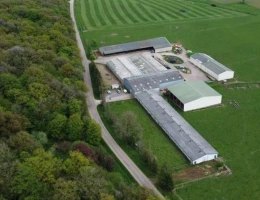
This department combines a large population with rural communes close at hand, so a dog kennel for sale in Haut-Rhin can draw customers without sitting far from the built-up plain. What reaches the market ranges from a family kennel fitted into an old Sundgau farmstead to premises put up for the purpose, with ranks of boxes and fenced paddocks; less often, a dog breeding business changes hands together with its pedigree stock. Sellers are operators stepping back, Alsatian rural agencies and notaries, and their listings state the licensed capacity and what the goodwill consists of. Each one appears in the national list of dog kennels and boarding businesses for sale.
Beyond photographs and an asking price, this page gathers what you need to weigh one property against another: rural property values in the department, where boarding demand actually sits, the construction faults that prove costly once the deed is signed, and the paperwork to insist on. If your plan is still an idea, the white paper « Créer une exploitation agricole » (in French) covers legal structures, funding and formalities.
In most sales the dwelling house is the largest single item, ahead of the kennel buildings and the goodwill. Transaction data is not published for this department (Alsace-Moselle land register), so the figures below are those of the Grand Est region. According to our country house observatory, the median price of a house in a rural commune in the region stood at €150,000 in 2025 (+4.2% year on year), or €1,400/m² of living space, across 7,885 recorded sales. The national median is €189,200.
Between two businesses here, the gap comes from what the dwelling house does not reveal: places covered by the authorisation, the condition of boxes and their runs, the size of the exercise paddocks, whether a treatment room and a quarantine box exist. Then comes the business itself — regular customers, a booking history, working relationships with local vets and groomers. To place the property share of the price, use our country house price observatory, then test your funding plan with our financial calculators.
Start with the floor and its drainage: a slab correctly falling to a connected channel, with no porous patches, spares you many hygiene problems. Look next at insulated bedding, the heating method, high-level ventilation that removes damp without chilling the animals, and the visual separation between boxes, which settles the residents. A run attached to each box avoids constant handling; drained paddocks stay usable after the rain that sweeps the plain. Check the perimeter fence, the gate, the water supply and the washing circuit. Recent buildings, a working laundry and a properly fitted treatment room translate straight into work you will not have to do.
Most holdings sell with the manager's house, sometimes with a cattery housed in a separate building. Insist on a clear split of the price between home, working buildings, land and goodwill: banks fund those items on different terms, and the deed has to distinguish them. Equipment is negotiated separately against an inventory, from transport crates to the commercial washing machine, from the fitted van to the online booking system.
The Mulhouse conurbation is the first reservoir, extended southwards by the border strip around Saint-Louis, where proximity to the Basel area keeps boarding demand alive all year. Colmar and its ring form a second pole, with pet owners willing to drive out to the wine villages or towards the Ried plain. The Sundgau, around Altkirch, offers roomier properties and more distant neighbours within reach of both cities. The Vosges valleys, from Thann to Guebwiller and Munster, bring seasonal tourist trade but rest on a thinner permanent population.
Land tightens on the plain and along the wine route, where prices follow residential and tourist pressure; it eases as soon as you climb into the hills or move into the rural south. A site in the outer ring, served by a well-used road, usually reconciles a purchase price you can carry with steady trade. Ask the seller where clients travel from and what share of them live across the border.
Ask straight away for the manager's ACACED certificate of competence and the receipt for the activity declaration lodged with the departmental veterinary and consumer protection service; without them, a takeover starts with putting the paperwork right. Above nine weaned dogs the premises fall under the classified installations regime, by declaration or by authorisation depending on numbers: read the prefectural order in force, its operating requirements and the terms for notifying a change of operator. The movement register, veterinary follow-up, animal identification and wash-water management are among the first things inspectors look at.
Noise decides the rest: measure the real distance to the nearest houses, ask the town hall about past complaints, and read the local planning rules before picturing an extension. One Alsatian peculiarity is that land publicity runs through the livre foncier, the regional land register, rather than the system used elsewhere in France; the notary will check easements, mortgages and rights of way there. On the business side, have the position of employment contracts, bookings already paid for and professional liability cover set out in writing.
Private sellers, rural estate agencies and notaries based in the department supply this selection. Work the filters — budget, licensed capacity, area — then save an alert, because boarding kennels here are often agreed within days of going online. To widen the search, browse dog kennels for sale in Grand Est.


