

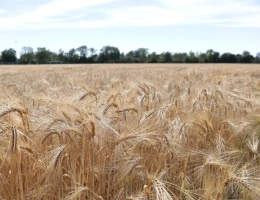
Buying an orchard for sale in Grand Est means stepping into two separate fruit-growing traditions: the mirabelle plum and quetsche plum country of Lorraine, and the foothills of Alsace, where cherries, apples and pears have held the slopes for generations. What comes onto the market ranges from standard-tree orchards attached to a farmstead to closely managed trellised plantings with irrigation and hail protection. Sellers are growers handing over, specialist rural agencies and notaries, and the listings give the species, the age of the trees, the machinery and the buildings. The same search can be widened to the national selection of orchards for sale.
What this page adds to the listings is what lets you judge one: how land is priced across the region, which departments still concentrate the plantings, how to read the condition of an orchard and which checks to run before making an offer. If you are preparing to set up or to diversify, our white paper « Créer une exploitation agricole » (in French) sets out the route from financing to the French farming qualification.
Land forms the base of the value of an orchard. DVF, the property sales database published by the French tax administration (vineyards excluded), records farmland changing hands in Grand Est at a median of €5,611/ha in 2025, average €7,490/ha, over 1,233 sales. Four sales in five fall between €3,151 and €14,830/ha; the national benchmark is €5,307/ha.
The SAFER benchmark completes the picture: €6,510/ha in 2025 for vacant land and pasture (-4.4% in a year, 0.0% in ten), against a national average of €6,460/ha, with let land trading some 17% below that.
With this kind of property, value is read first in the trees. The age of the orchard, the share of plots due for replanting soon, how well the varieties match demand, the rootstocks and the state of the trellising matter more than the stated area. Then come the equipment that secures a harvest under a continental climate, hail netting, frost towers or overhead sprinkling, followed by the packing shed, the grader, the cold store and the outlet. Compare land values with our land price observatory and build your purchase plan with our financial calculators.
Two models coexist here and they cannot be valued together. Standard-tree orchards, often grazed beneath, need little equipment but crop irregularly and mostly feed distilling and processing. A trellised orchard on dwarfing rootstocks is examined row by row: planting year, rootstock, density, condition of posts and wires, irrigation system, netting. Faced with a fruit-growing holding, ask for the planting map with dates and varieties, then cost the replanting that lies ahead, because an ageing orchard hands the buyer several seasons with no income from the rows that have to be grubbed out.
Machinery and buildings follow: a narrow or straddle tractor, sprayer, pruning and picking platforms, bins and trailers, then the shed, the grader, the cold store and, for apples and pears, controlled-atmosphere storage. An approved distillery or processing workshop changes the economics of the property and is valued separately. Where the sale bundles a house, farm buildings and arable land, insist on breaking the price down item by item before you offer: lenders do not treat the dwelling and the orchard in the same way.
In Alsace, Bas-Rhin (67) concentrates part of the supply on the Vosges foothills and in the Val de Villé, kirsch country, as well as in the Outre-Forêt, where many standard-tree orchards survive; the Kochersberg, given over to arable, offers only scattered plots. Haut-Rhin (68) combines the wine-growing foothills from Thann to Guebwiller, where apples, pears and quetsche plums slip in between the vines, with the Sundgau, known for its cherry orchards and its kirsch. In both departments, competition from vines, arable crops and housing pushes land prices up and keeps listings scarce.
Lorraine is mirabelle plum country, grown under a geographical indication. Meurthe-et-Moselle (54) plants them around the Toulois and the Saintois, Meuse (55) along the Côtes de Meuse, where orchards look out over the Woëvre plain, Moselle (57) in the Pays messin and the Saulnois, and Vosges (88) on the hills of the Vôge and along the Moselle valley. Quetsche plums, cherries, apples and pears usually round out the range, and distilleries take up the fruit that does not make grade. Entry prices stay more moderate than in the Rhine valley, with holdings that combine orchard, buildings and land.
Further west, commercial fruit growing gives way to arable farming and to the Champagne vineyards. Ardennes (08) keeps standard-tree meadow orchards inherited from livestock farming, often sold with grassland. Aube (10) and Marne (51) mainly offer modest fruit plots close to the towns, where direct sales and pick-your-own find their customers. Haute-Marne (52) has farmsteads ringed by old orchards at contained prices, of interest both to buyers after a fruit farm and to those planning a diversification. An apple orchard here is more often a small planting than an intensive block.
The continental climate makes spring frost the leading technical issue in the region: the early flowering of mirabelle, quetsche and cherry trees exposes valley-bottom plots, while well-oriented slopes come through better. Ask for the recent harvest record, for the presence of frost towers, candles or an overhead sprinkling system, and for the condition of the hail netting. Check the water supply next: borehole, reservoir or network, abstraction permit and allocated volumes, because unsecured irrigation puts a lasting ceiling on what a fruit holding can produce.
Legally, the takeover remains subject to the structures control, the French authorisation regime for farming agricultural land, and to SAFER's pre-emption right. Rented plots pass with their rural lease, whose term and clauses need reading. Where the orchard is approved under a geographical indication or certified organic, both the approval and the conversion period are transferred through the certification body, never automatically. Finally, go through the spraying records, the origin of the planting material and any rights of way between fragmented plots.
Harvest concentrates almost all the labour requirement into a few weeks per species. A buyer therefore weighs up accommodation for seasonal workers, vehicle access to the plots, how crews are run and whether an employers' group can be used. A mix of species that spreads picking from cherries through to apples smooths that constraint and keeps crews coming back season after season. Being close to Strasbourg, Mulhouse, Nancy, Metz and Reims also makes recruitment easier, as it does selling fruit through short channels.
On the sales side, the region combines membership of a producer organisation, which handles grading, storage and access to retail buyers, with strongly developed short channels: markets, farm shops, pick-your-own, deliveries to producer-run stores, and processing into juice, preserves and fruit spirits. Ask how volumes were divided between those outlets and for the list of current contracts, since not all of them follow a change of operator. A local customer base built over years is a real part of what is being handed on.
The offers gathered here come from owners handing over, firms specialising in rural property and notaries' offices, and they turn over as retirements come round. Sort by department, by species planted or by budget, create an alert to follow new listings, and extend your search among the farms for sale in Grand Est.