Looking for a forest to sell is a project that attracts many people, but it can be frightening because of a lack of knowledge of the regulations and obligations weighing on forest owners.
This article will guide you through the main points you need to know to make a successful purchase of a woodland or forest. You will also find a link to additional articles providing an in-depth look at a number of points.
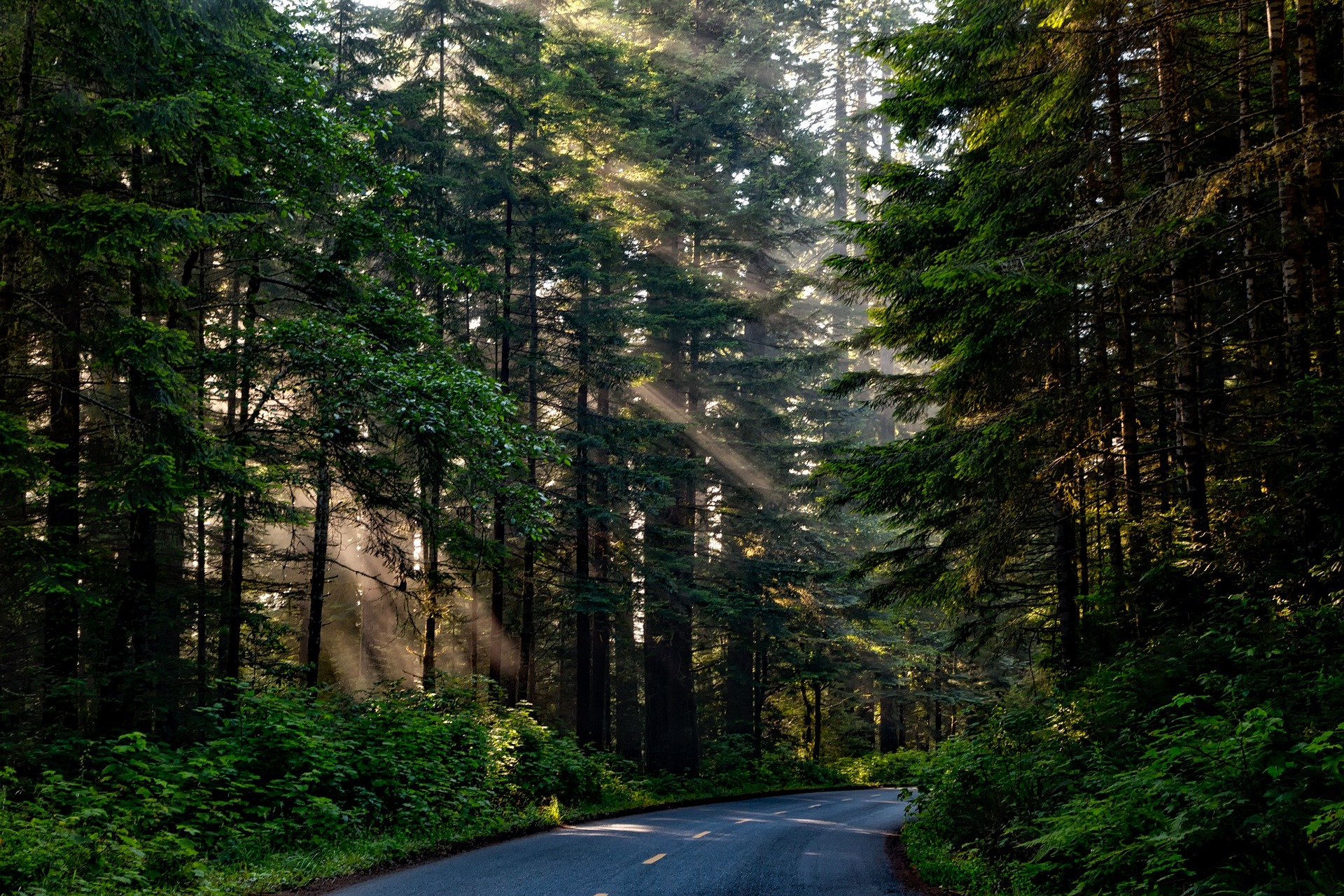
French forests cover more than 17 million hectares and are owned by two categories of owners: private owners for 13 million hectares (3.1 million owners) and public owners for 4.3 million hectares. The forest also covers 8.25 million ha in the French overseas departments, including 8 million ha in French Guiana alone.
The surface of the French forest has increased significantly during the 20th century: In 1908, the surface of the French forest was close to 10 million ha and covered 19% of the territory compared to 31% nowadays.
It should be noted that 380,000 forest owners own 76% of the private surface area (surface area greater than 4 ha). 3 million hectares are therefore held by more than 3 million owners with an average surface area of less than 1ha.
This important fragmentation of the French private forest strongly affects its management. The main objective of the specific measures, both fiscal and linked to preferential right or pre-emption right, is to reduce this fragmentation.
Buying a forest is a project that meets a variety of expectations:
Whatever the project, a careful examination of the market and the tax systems is necessary before making the purchase.

If the tax regimes are attractive, which we will see later, this can be explained by the relatively low profitability of the forest in the long term.
On average, experts consider that the profitability of a forest is in the order of 1 to 2% per year with however strong variations according to whether you will carry out cuts or plantations. The income from the cutting of trees must, for an important part, be reinvested in new plantations and the maintenance of existing plantations.
Some productions can achieve much higher yields due to shorter rotations. Well managed, forestry investment can be a good investment over time.
Considering the duration of the exploitation cycles and the different tax measures, the forestry investment must be made on a long term horizon of at least 15 to 30 years.
As with farmland or residential property, the prices of forests for sale vary widely depending on the region and the make-up of the woodland. It is important to know the average prices on the market, but above all you must take into account the condition of the forest on the day of sale :
If you are not familiar with these questions, we recommend consulting a forestry expert who will be able to assess the woodland for sale against these criteria and many others.
To give you reliable benchmarks, we have built an observatory of forest prices in France based on DVF data (Demandes de Valeurs Foncières), the public database that records every property sale registered by notaries. Our analysis covers 35,100 transactions of woods and forests completed between July 2020 and December 2025, representing more than 302,000 hectares traded for a total value of nearly 2 billion euros.
The price of a forest in France in 2025 (DVF data)
A useful clarification : we favour the median price over the average price. The average is strongly influenced by a few very high transactions ; the median, which splits the market into two equal halves, better reflects the reality of a typical purchase.
Our figures align closely with those of the SAFER : for 2025, the SAFER reports an average price of €4,950/ha, within less than 1 % of our DVF median. This agreement between two independent sources reinforces the reliability of these benchmarks. The same method feeds our observatory of rural property prices, which covers all types of rural property.
Buying a forest takes place in a market where available properties remain scarce against sustained demand. Over the period observed, the volume traded has stayed stable, at around 55,000 hectares per year. In terms of values, the median price rises steadily : it went from €4,624/ha in 2021 to €4,936/ha in 2025, an increase of nearly 7 % over four years.
|
Year
|
No. of sales
|
Median price (€/ha)
|
Average price (€/ha)
|
|
2020 (H2, partial)
|
2 784
|
4 411
|
5 794
|
|
2021
|
6 521
|
4 624
|
6 122
|
|
2022
|
6 473
|
4 825
|
6 487
|
|
2023
|
6 569
|
4 854
|
6 435
|
|
2024
|
6 424
|
4 846
|
6 266
|
|
2025
|
6 329
|
4 936
|
6 214
|
Annual trend in forest prices (2020-2025) — Source: ma-propriete.fr forest price observatory, based on DVF data. The year 2020 covers the second half only.
The differences between regions are considerable : a forest sells on average two to three times more in the north of France than in the Massif Central or the South-West. The regions where demand is strong and land is scarce (Hauts-de-France, Normandy, Île-de-France) show the highest median prices.
|
Region
|
Median price (€/ha)
|
No. of sales
|
|
Normandy
|
9 202
|
1 596
|
|
Hauts-de-France
|
8 853
|
2 009
|
|
Île-de-France
|
6 615
|
640
|
|
Centre-Val de Loire
|
5 588
|
1 867
|
|
Provence-Alpes-Côte d'Azur
|
5 207
|
2 101
|
|
Grand Est
|
4 958
|
2 836
|
|
Pays de la Loire
|
4 896
|
1 435
|
|
Corsica
|
4 866
|
371
|
|
Brittany
|
4 822
|
1 298
|
|
Bourgogne-Franche-Comté
|
4 775
|
3 408
|
|
Auvergne-Rhône-Alpes
|
4 000
|
5 257
|
|
Nouvelle-Aquitaine
|
3 684
|
8 009
|
|
Occitanie
|
3 560
|
3 690
|
Median forest price by administrative region (2020-2025) — Source: ma-propriete.fr forest price observatory, based on DVF data.
The price per hectare does not fall uniformly as the area increases : it follows a U-shaped curve, a particularity of the forest market. Very small plots (1 to 2 ha) sell at a high price per hectare, sought after by leisure buyers willing to pay a premium for a small wood. The price then drops for intermediate areas, before rising again for large estates (over 25 ha), which are rarer and better managed.
|
Area band
|
Median price (€/ha)
|
% of sales
|
|
1 to 2 ha
|
6 059
|
28.5 %
|
|
2 to 5 ha
|
3 985
|
36.8 %
|
|
5 to 10 ha
|
3 443
|
17.6 %
|
|
10 to 20 ha
|
4 010
|
9.2 %
|
|
20 to 50 ha
|
5 330
|
5.4 %
|
|
50 to 100 ha
|
6 810
|
1.7 %
|
|
Over 100 ha
|
7 361
|
0.9 %
|
Median forest price by area band (2020-2025) — Source: ma-propriete.fr forest price observatory, based on DVF data.
Nearly two-thirds of sales involve forests of less than 5 ha : the market is dominated by small areas, reflecting the fragmentation of French private forests. To explore the detail of prices by region and by size, consult our observatory of forest prices in France, updated every year.
The purchase of a forest, whether it is done personally or through a Forestry Group, is done under the normal registration rights regime, i.e. at a cost of 5.89% of registration rights (with some departmental particularities).
Since January 1, 1999, there is no longer a preferential regime for registration fees to be paid when purchasing a forest.
In addition to these registration fees, you will have to add the emoluments and disbursements of the notarized deed of acquisition as well as the possible guarantee fees related to your financing.
Consequently, the amount of the "notary fees" is generally between 7.5 and 8% of the purchase price.
However, the purchase of shares in Groupements Forestiers is subject to a fixed registration fee of 125 € as opposed to 5% for classic real estate companies.
A Groupement Forestier is a special type of real estate company whose purpose is to exclusively hold forestry properties.
There are 2 types of Groupements Forestiers :
A third type, the Groupement Foncier Rural, is a Groupement Foncier holding both agricultural and forestry assets. It benefits from the tax system specific to Groupements Fonciers Agricoles (GFA) for its agricultural assets and from the tax system specific to Groupements Fonciers Forestiers (GFF) for its forestry assets.
The constitution of a Groupement Forestier is done without paying registration fees. The contribution of forest plots after the constitution of the company can also benefit from an exemption from registration fees if the land is less than 5ha and has a value of less than 7 623 €.
Buying shares in a Groupement Forestier that already owns a forest allows you to save a lot of registration fees because, as mentioned above, this sale will be subject to a fixed fee of 125 €. It will be necessary to add the fees of the drafter of the deed and some additional costs, but the saving can be very important (up to 5% of the value of the forest).
Before embarking on the creation of such a structure, it is essential to bear in mind the disadvantages of forestry groupings, particularly those linked to the administrative formalities of companies.
This structure is also an investment tool allowing small investors to pool a forestry purchase and also presents advantages compared to the undivided ownership system which is by nature more fragile.
The sustainable management of forests guarantees their biological diversity, their productivity, their regeneration capacity, their vitality and their ability to satisfy their economic, ecological and social functions.
The documents of sustainable management of private forests, which attest to its consideration, were created by the law of forestry orientation of 2001, and allow to justify a guarantee of sustainable management necessary to obtain any aid or tax reduction.
What are these documents?
The Simple Management Plan can be realized by a forestry cooperative, by a forestry expert or by the owner himself and will be the object of an approval by the Regional Center of the Forest Property.
The management plan is mandatory to benefit from tax advantages.
DEFI acquisition, which stands for Dispositif d'Encouragement Fiscal à l'Investissement dans l'Acquisition d'une Forêt (tax incentive scheme for forest acquisition), is a tax credit scheme. It is available to purchasers of a property larger than 4ha (or enabling a surface area of 4ha to be reached) or of shares in a landholding group.
In return for the tax credit, the owner undertakes to conserve the forest for 15 years and to apply a sustainable management plan.
The tax credit is 25% of the purchase price, with a ceiling of €6,250 for a single person and €12,500 for a couple.
When you subscribe to shares in a groupement forestier d'investissement (GFI), you can take advantage of an income tax reduction. This corresponds to the Madelin PME scheme (article 199 terdecies-0 A of the French General Tax Code).
In our next article, we'll look at the key points to bear in mind when managing a forest (income, income tax, property wealth tax).
Building in a forest is subject to town planning regulations.
Forest plots have a specific classification (N for Natural) and it is forbidden to build a dwelling there (Art. R151-25 of the town planning code). Any buildings that may be permitted are those required for farming and forestry. Light leisure dwellings may be authorised by your local council.
If you want to live in the middle of your own forest, you'll have no choice but to buy a house built in the heart of a forest plot.
It is not compulsory to insure your forest. However, given the risk of natural disasters, it may be wise to take out insurance to cover your civil liability.
You now know the main rules for buying a forest, as well as the average selling prices and tax benefits available to you.
Now it's up to you to define the specific details of your project: region, surface area, budget, etc., and to search for forests for sale using our property advertisements portal.