
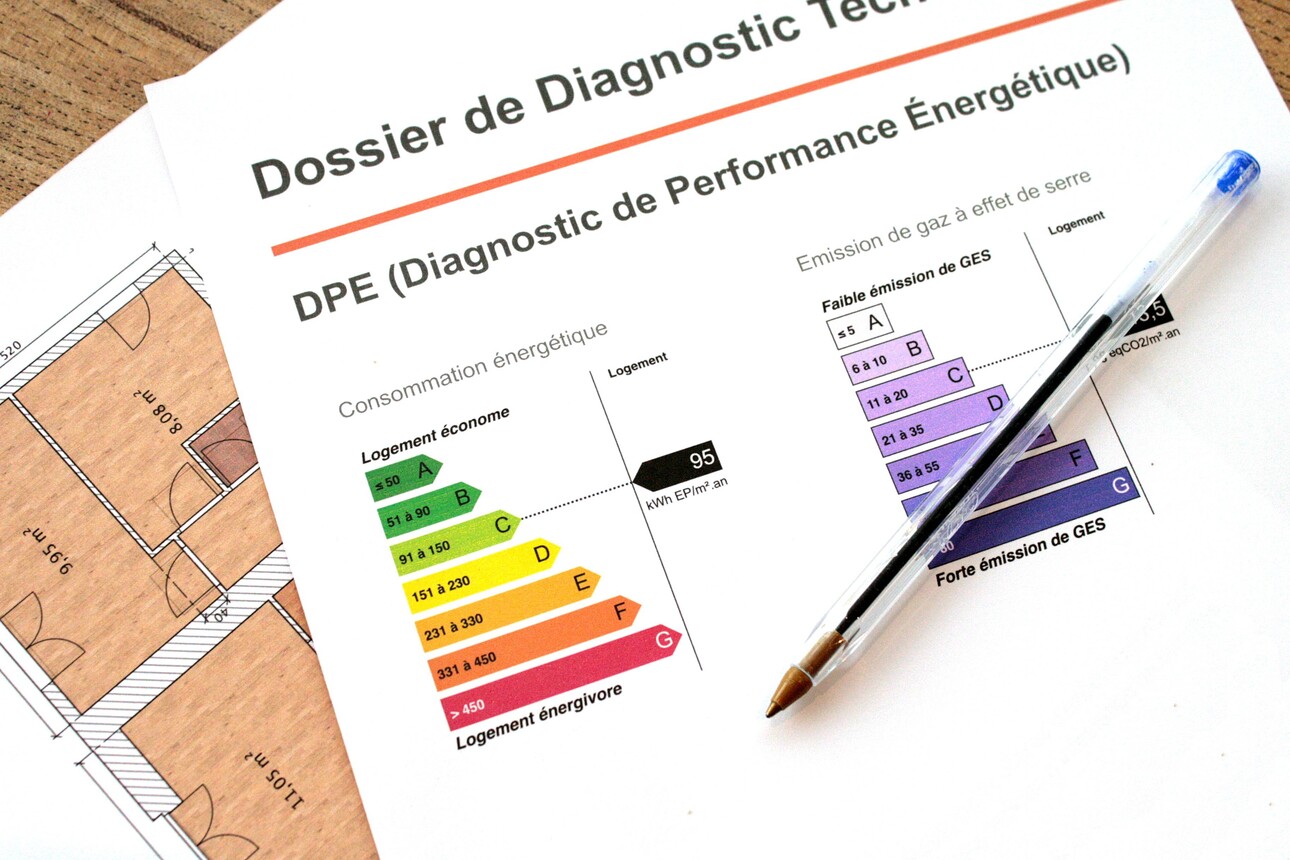
When you start renovation work on a Parisian property or are getting ready to sell it, real estate diagnostics quickly appear on the list of things to settle. And yet, it is often the least prepared part: they are ordered in a rush the week before signing, only to discover that a diagnostic has expired, or that one is missing that hadn't been anticipated.
In Paris specifically, the stock of old buildings generates specific obligations that owners of recent properties may not necessarily be aware of.

The stock of old buildings, a Parisian reality
The vast majority of Parisian housing was built before major building material regulations. In practical terms, this means many properties are affected by the asbestos diagnostic (mandatory for any building permit prior to July 1997) and the lead diagnostic (mandatory for housing built before 1949). In some districts, almost the entire building stock falls into these categories.
The lead diagnostic is not limited to visible paint: it also concerns coatings under the successive layers of paint that have accumulated over the decades. For renovation work, this is a critical point, as drilling or stripping without having had a diagnostic performed can expose occupants and craftsmen to real risks.
Sales and rentals: two different lists
A frequent confusion consists in believing that diagnostics for sales and for rentals are the same. This is not the case, neither in the number of required diagnostics, nor in their duration of validity.
For a sale, up to ten diagnostics can be mandatory depending on the property: DPE (Energy Performance Certificate), electricity, gas, asbestos, lead, termites, Carrez law, state of risks and pollution, and depending on the case, DTG or sanitation. For a rental, the list is shorter but some validity periods are different: the electricity diagnostic is valid for three years for a sale, and six years for a rental.
The Carrez law measurement is specific to the sale of co-ownership lots, which represents the vast majority of transactions in Paris. An error in surface area of more than 5% compared to what is mentioned in the deed entitles the buyer to a proportional price reduction: it is better not to let this risk linger.
Before work, diagnostics that are often forgotten
Diagnostics do not only concern transactions. Before starting renovation work, certain diagnostics are also mandatory, notably the asbestos diagnostic before work (DAAT), which is distinct from the private areas asbestos diagnostic required for a sale. It is more in-depth and aims to protect those working on the site.
Starting work without this diagnostic in an eligible building exposes the company carrying out the work to sanctions, and the client's liability can also be engaged.
Choosing a certified diagnostician
All real estate diagnostics must be carried out by a professional certified by a COFRAC-accredited body. This is not a formality: a diagnostic carried out by a non-certified operator is legally void and will have to be redone. In Paris, the supply of diagnosticians is dense, but quality and responsiveness vary greatly.
For Parisian properties, providers like Maître Diagnostic operate across all districts with certified diagnosticians, a report delivered within 24 hours, and appointments possible within three days. This type of responsive provider is particularly useful in the context of a sale where the delays between the preliminary contract and the final deed leave little margin.
Validity periods, a point to monitor
A diagnostic carried out a few years ago is not necessarily still valid. The DPE is valid for ten years, but electricity and gas diagnostics are only valid for three years for a sale. The state of risks and pollution is only valid for six months. The termite diagnostic is also six months.
Before putting a property up for sale in Paris, it is better to review the expiration dates of each document rather than discovering it when assembling the sales file. Redoing several diagnostics in an emergency often costs more than having anticipated them.