Every autumn, the same scenario plays out for many property owners: the first cold snap arrives, only to reveal that the woodpile is insufficient or, worse, that the available logs are still damp. Yet preparing firewood is not something decided in October, but one to two years earlier. For the owner of woodland, a country house or a farmhouse, this is not a seasonal emergency: it is a recurring cycle, to be planned the way one plans a harvest. Understanding the logic of the firewood calendar (drying time, organising the work, storage) turns a last-minute chore into a well-managed routine.
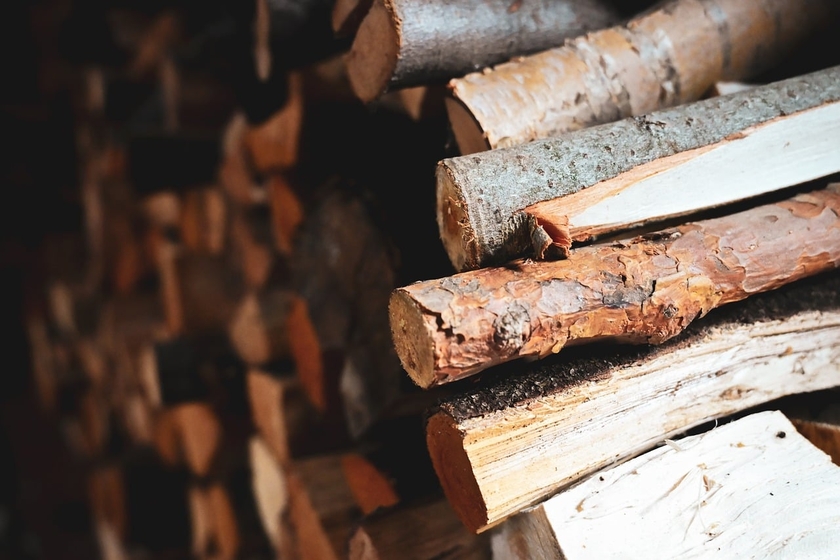
Wood split and stacked early in the year will be ready for the winters to come.
The central constraint is a physical one: a freshly felled tree contains around 50% water. To burn properly, a log needs to drop below 20% moisture content. Natural drying, however, takes time — a great deal of it. For the most sought-after hardwoods (oak, beech, hornbeam), allow 12 to 18 months of open-air drying under good conditions. Softer species dry faster but deliver a lower calorific value.
This residual moisture level is no purist's quibble. Wood that is too damp devotes part of its energy to evaporating the water it contains instead of heating the room: heat output can fall by half. Incomplete combustion also fouls the flue with tar deposits (creosote), increases fine-particle emissions and accelerates wear on the appliance. The French environment agency ADEME therefore recommends burning only properly dried wood, the first condition for efficient, low-pollution heating.
The conclusion is self-evident: wood cut in spring for the following winter simply will not be ready in time. The wood you will burn in 2027 must be cut and split now. It is this reality that shapes the entire calendar.
Once this lead time is understood, the organisation becomes simple: the ideal is to cut in late winter, when the sap has descended and the wood naturally contains less water, then to split it promptly. A split log exposes more surface area to the air and dries considerably faster than a whole round. Working early in the year also means avoiding the autumn rush: delivered firewood at peak prices, reduced availability, hasty choices.
For the owner of woodland or a large plot, the challenge is also logistical. Parcels must be accessed when ground conditions allow, large volumes hauled out, and family labour or a contractor sometimes brought in. Those considering going further and acquiring their own woodland will find the essential guidance in our guide to buying a forest before taking the plunge.
Finally, the quality of the equipment weighs heavily in the equation: well-maintained cutting tools, suitable splitting equipment and reliable protective gear, such as those offered by forestry equipment specialist Le Besson, radically change the time spent on the job and the physical strain involved. Between an efficient afternoon and an exhausting weekend, the difference often comes down less to the quantity of wood than to the way you go about it.
The final step, too often neglected: storage. Wood perfectly cut and split at the right time can remain damp if the stack is poorly designed. A few simple principles make all the difference. The wood should be raised off the ground (pallets, sleepers) so it does not absorb ground moisture, stacked in well-ventilated rows rather than in a compact heap, and covered only on top so the sides remain open to air circulation.
Exposure matters just as much: a sunny spot facing the prevailing winds noticeably speeds up drying. Conversely, an enclosed lean-to or a stack set against a north-facing wall can prolong the process by several months. The height of the stack also deserves thought: beyond roughly 1.50 metres, stability becomes a safety issue and the core of the stack dries less well.
Here we come back to the calendar logic outlined above: poorly planned storage cancels out the benefits of an early cut. Cutting 18 months in advance is pointless if the wood spends those 18 months under a full tarpaulin laid on the ground. Good firewood is the product of a complete chain — cutting at the right time, prompt splitting, ventilated storage — each link of which prepares the winter after next. This is precisely what sets the far-sighted owner apart from the one who, every autumn, finds himself chasing after his logs all over again.