The French industrial sector is undergoing a genuine transformation. Gone are the days when factories were merely functional warehouses pushed to the outskirts of cities. Today, these spaces must meet far more complex expectations: operational performance, environmental responsibility, employee well-being, and even seamless integration into the urban fabric.
Faced with these new challenges, industrial architecture has become a major strategic lever. It no longer simply shelters machines; it structures flows, enhances usage, and actively contributes to a company’s brand image. This is precisely the vision embodied by Cimaise Architectes, an agency established between Saint-Étienne and Paris that has been rethinking the design of industrial buildings for several decades.
For a long time, industrial buildings were seen as simple containers. A roof, walls, and that was it. But that era is over.
At Cimaise Architecte, every project begins with a strong conviction: an industrial building must be designed as a true tool serving the activity it houses. Internal circulation, flow organization, spatial clarity—everything matters. This is not merely an aesthetic concern, far from it. The very efficiency of the site depends on these architectural choices.
Consider production areas, workshops, or logistics platforms. Their layout directly determines the smoothness of daily operations. A high-performing industrial building is, above all, an intelligently designed building, where every technical detail has been anticipated from the very first sketches.
You know what truly makes the difference in a successful industrial project? Listening. Before even drawing a single plan, the Cimaise team immerses itself in the company’s operational realities.
How do raw materials circulate? Which areas need to remain flexible to adapt to future developments? How can increasing automation or potential extensions be anticipated? These questions are far from trivial.
This in-depth analysis phase helps avoid a common pitfall: creating spaces that work on paper but prove inefficient in real-life conditions. By combining operational dialogue, rigorous analysis, and forward-thinking planning, the agency delivers sustainable projects that respect budgetary constraints while providing real added value.
Beyond understanding needs, architecture must make a tangible contribution to industrial performance. How? Several levers come into play.
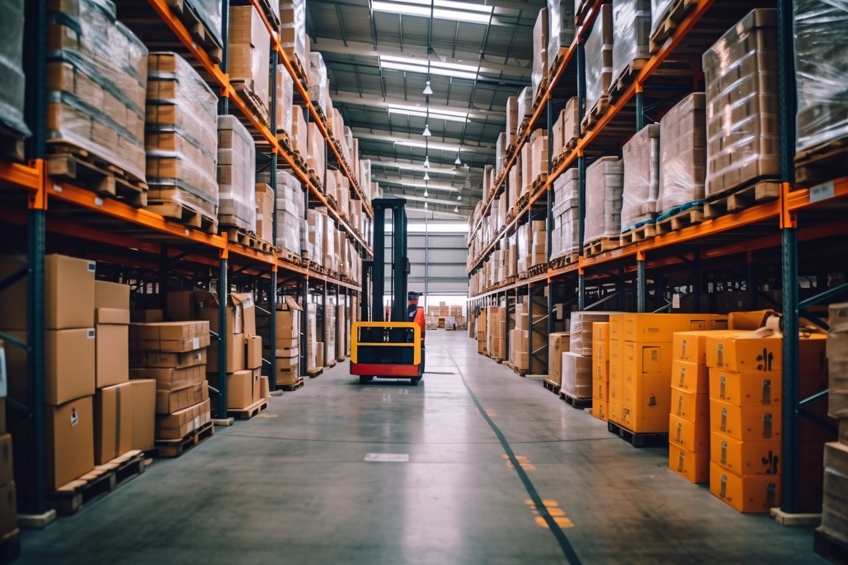
First, circulation optimization. Production lines, storage areas, delivery access points—everything must be intuitive. Smart spatial organization significantly reduces downtime and minimizes routing errors. Not to mention the notable improvement in overall safety.
Next comes surface rationalization. Contrary to popular belief, designing large spaces does not necessarily guarantee better production. Cimaise favors the intelligent use of every square meter, maximizing the actual use of productive areas while limiting waste.
Finally, architecture must literally align with internal processes: multipurpose areas, fluid interfaces between workshops and offices, clear logistics access, and perfectly integrated technical spaces. Every element counts.
Let’s be honest: industrial architecture can no longer ignore the people who work in these spaces. Working conditions, comfort, and safety have become essential design criteria.
Well-lit and properly ventilated spaces enhance concentration. They reduce the risk of errors and significantly improve employee well-being. The emphasis on natural light, acoustic management, and spatial clarity is not merely about comfort—it is a genuine productivity factor.
As for safety, it is not added at the end of the project like an extra layer. Cimaise integrates it from the very first sketches, ensuring that movement flows, risk zones, and emergency systems are an integral part of the architectural design.

Cimaise Architectes’ territorial roots are a clear strength. Historically based in Saint-Étienne, the agency has developed a strong presence in Paris. This dual location offers incomparable richness.
Saint-Étienne brings a deep industrial heritage. The city has shaped a pragmatic, contextual approach firmly grounded in the productive realities of local territories. Paris, on the other hand, provides access to more complex national projects, incorporating metropolitan challenges such as urban density, strict regulatory constraints, and diverse uses.
This presence across two territories significantly strengthens the agency’s ability to operate in a wide variety of contexts.
The future of industrial architecture necessarily lies in sustainability and adaptability. Cimaise systematically integrates environmental considerations from the earliest design stages. The choice of sustainable materials, advanced energy optimization, potential integration of photovoltaic panels, and strict compliance with environmental standards are all part of the approach.
These initiatives are not mere greenwashing. They create industrial buildings capable of adapting to future technological and economic changes while significantly reducing their environmental footprint. That is modern architectural intelligence.