
The acoustics of a real estate property are often pushed into the background, with priority given instead to aesthetics, energy performance, or spatial layout. Yet sound comfort plays a decisive role in quality of life and in the overall value of a property.
Whether it is a home, offices, a retail space, or a public-access building, poorly controlled acoustics can quickly become a source of discomfort—or even stress. Optimizing the acoustics of a property is therefore not a luxury, but a genuine investment.
Noise is now one of the leading causes of dissatisfaction in buildings. Excessive reverberation, poor speech intelligibility, or external noise pollution directly affect occupants’ well-being.
In a residential setting, poor acoustics can disrupt concentration and strain relationships with neighbors. In a professional environment, it can reduce productivity, increase mental fatigue, and damage a company’s image.
It should also be noted that, in certain cases, acoustic optimization is a regulatory requirement. Some public-access buildings must therefore pay particularly close attention to this aspect.
In acoustics, it is essential to distinguish between two main types of problems:
Interior acoustics: this relates to sound reverberation within a space—in practical terms, echo and background noise.
Sound insulation: this aims to limit the transmission of noise between enclosed spaces or from outside sources (neighbors, traffic, technical equipment).
In many real estate properties, both issues coexist. Each requires specifically adapted solutions.
An acoustician works in much the same way as a doctor. The first step is therefore to diagnose the existing situation. An acoustic assessment makes it possible to identify problematic areas, measure reverberation times, and define clear objectives based on how the space is used. This step is essential to avoid inappropriate or ineffective solutions.
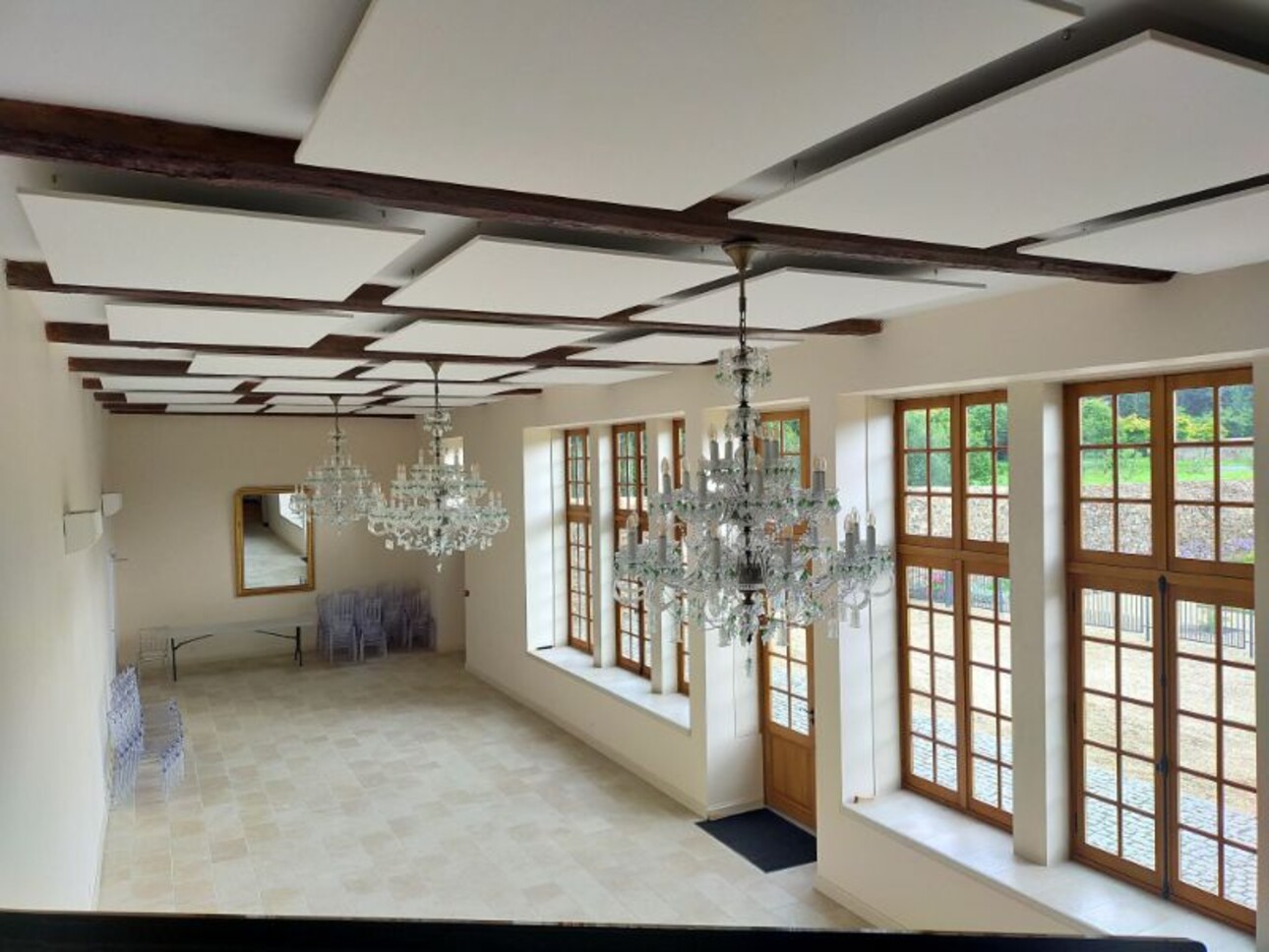
To improve indoor sound comfort, it is necessary to absorb part of the sound waves. This involves installing acoustic treatment solutions such as:
Wall-mounted acoustic panels
Suspended acoustic baffles
Stretched acoustic fabrics
These systems help reduce echo and, as a result, improve speech intelligibility. Some products available on the market can also add a decorative touch to your interior.
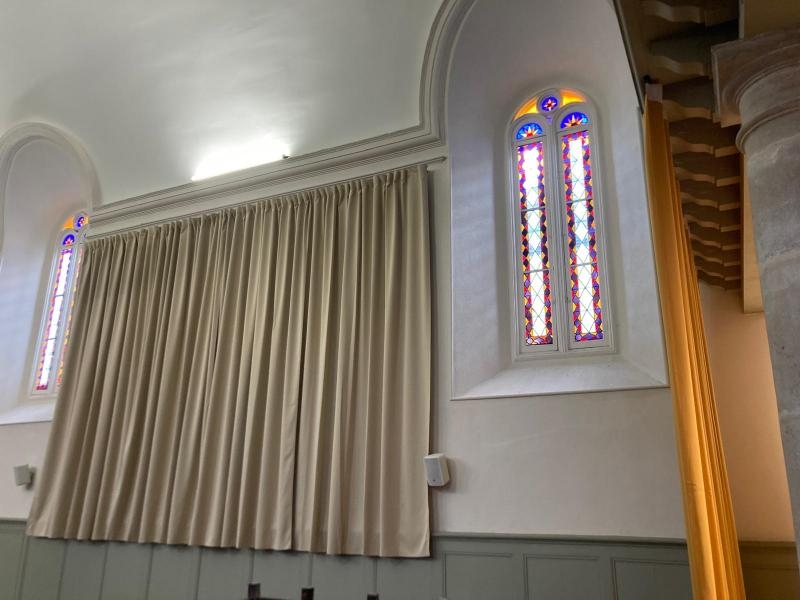
When the issue involves external noise or sound transmission between rooms, it is necessary to act on the building’s structure. This may include:
Reinforcing partitions and ceilings
Insulating floors
Acoustic treatment of joinery (doors and windows)
These interventions must be designed in line with the technical and architectural constraints of the property. However, for relatively moderate noise issues, multi-layer fabrics can offer excellent soundproofing performance.
For new construction projects, integrating acoustics from the design phase helps optimize both costs and performance. The choice of materials, room volumes, furniture, and layout has a direct impact on the acoustic behavior of spaces. A holistic approach ensures a coherent and long-lasting result.
Optimizing the acoustics of a property delivers immediate and measurable benefits:
Improved comfort and well-being for occupants
Reduced stress and listening fatigue
Better speech intelligibility
Increased property value
A more professional and higher-quality image for businesses and public-access spaces
In a context where quality of use has become a major criterion, acoustics are a powerful differentiating factor. For a restaurant, an open-plan office, or a hotel, perceived value is dramatically higher when acoustics are well designed. To avoid negative reviews, it is best to address this issue early—especially since the required budget is quickly recouped thanks to the durability of acoustic products.
Acoustics are a fundamental element of a property’s overall quality. Whether for a private home or a professional space, optimizing acoustics is a profitable investment. By relying on an accurate assessment and well-suited solutions, it is possible to transform a noisy space into a pleasant environment. This approach is therefore highly recommended to enhance the value of your property.