
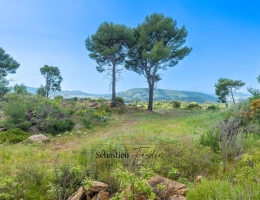
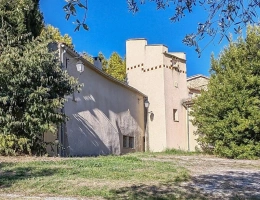
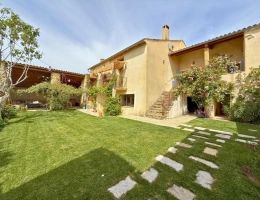
Behind the phrase sheep farm for sale in Provence-Alpes-Côte d'Azur you will find trading businesses here, with their flock, their buildings and their pastoral areas, not stone shelters restored as holiday homes. Sheep farming in this region is pastoral above all: wintering on the plain or in the hills, summer grazing high in the mountains, long journeys and extensive rough grazing. Properties come from farmers handing over, from rural property specialists and from notarial offices, with flock size, the areas used and the buildings set out. They join our national selection of sheep farms for sale.
This page supplies the benchmarks a purchase actually turns on: what farmland, pasture and rough grazing are worth in the region, which departments genuinely see ovine holdings change hands, how to judge a sheepfold and which regulatory points to settle before signature. If your plan is to set up, our white paper « Créer une exploitation agricole » (in French) describes the whole sequence.
Land weighs heavily on the budget for a sheep farm. Transfers published by the French tax authorities (DVF, excluding vineyards) put the median for farmland in Provence-Alpes-Côte d'Azur at €13,518/ha in 2025, with an average of €14,884/ha over 59 sales. Eight transactions in ten settle between €5,947 and €23,101/ha, where the national median is €5,307/ha.
A second reference, the SAFER land value benchmark, sets vacant land and pasture at €12,260/ha for 2025, +2.8% in a year and +12.5% over a decade; the French average is €6,460/ha, and a sitting tenant costs a plot roughly 17% of its value.
Here more than elsewhere, the value of a sheep holding goes beyond the land owned outright. It takes in the sheepfold and its ability to house lambing, the handling equipment and loading dock, the breed and conformation of the flock, secure access to wintering ground, the agreements that open up alpine pasture, water, fencing, protection measures and the commercial outlet. Set all of that against our land price observatory, then model the funding with our financial calculators.
A sheepfold in this region works first as shelter: it serves lambing, spells of bad weather and finishing, since the flock spends much of the year outdoors. Examine the bedded area, ventilation under a hot and windy climate, the roof frame, the covering, storage for straw and forage that is often bought in, and whether lambing pens are available. A handling race, sorting pens and a loading dock a lorry can reach matter greatly for flocks that move, as do any shelters or pens at altitude attached to the holding.
The flock is judged on ewe and ram numbers, breed and hardiness, how breeding is managed, health status and fitness to walk. A holding handed over with its working dogs, its netting, its portable fencing and its shearing equipment lets a buyer start without a break. Where the listing ties together the house, the land and the ewe flock, obtain a precise split: in a market where rural housing sells dearly, confusing a residence with a production tool leads straight to overpaying.
Alpes-de-Haute-Provence (04) and Hautes-Alpes (05) form the backbone of regional sheep farming. They hold the largest flocks, holdings built around summer mountain grazing, farmsteads set in the valleys and systems largely geared to lamb, part of it sold under the Sisteron lamb geographical indication. Hautes-Alpes adds the high pastures of the Champsaur, the Valgaudemar and the Dévoluy; Alpes-de-Haute-Provence combines plateaux, dry mountains and valleys, with very extensive rough grazing and land that is often fragmented.
Bouches-du-Rhône (13) carries a long ovine tradition: the Crau plain pairs irrigated meadows and renowned hay with the wintering of flocks that head back to the Alps in spring, while the Alpilles and the limestone ranges provide rough grazing. Gravity irrigation and water rights are a real component of value there and should be checked plot by plot. In Alpes-Maritimes (06), farming holds on in the hinterland and the Mercantour valleys, on modest holdings where flock protection is a central question.
Var (83) keeps flocks on its inland plateaux and its high country, often linked to managing natural areas and to using grazing as fire prevention, but competition from housing and tourism makes land scarce and dear as soon as you move towards the coast. Vaucluse (84) shows a comparable picture, between the Monts de Vaucluse, the Ventoux and lowlands made highly valuable by vines and market gardening. In both departments a holding sold with comfortable living accommodation quickly reaches price levels unrelated to its productive capacity alone.
Most holdings here do not live on the land they own. They combine wintering ground, hill grazing and alpine pasture rented or used through a pastoral group, under multi-year agreements that do not follow the rules of an ordinary rural lease. Before making an offer, ask for the list of areas genuinely used, the remaining term of each agreement, the renewal conditions and the consent of the local authorities or owners involved: the strength of the system usually lies there rather than in the walls.
Moving the animals then shapes the whole working year: preparation, the route or the transport, shepherding in the mountains, accommodation for the shepherd, the return and the sorting. Those costs show up in the accounts and are worth discussing with the seller, since they vary widely from one holding to another. Support schemes tied to pastoralism and mountain areas depend on areas declared under specific rules: have them explained before you build your forecast.
Depending on flock size and housing, the unit falls under departmental health regulations or under the classified installations regime, the French permitting system for livestock sites: ask for the exact regime and the order that applies, along with the distances required from dwellings, all the more sensitive as residential areas have spread. The flock's health file, its official qualifications and abortion monitoring should be requested in writing. Check too for easements tied to protected sites, regional and national parks and water catchment perimeters, which are common inland and in the mountains.
Predation calls for separate scrutiny: the protection measures in place, guard dogs, night pens, how shepherding is organised and the liability that follows towards walkers. On land, the rural lease continues with the buyer subject to the landlord's agreement, and the sale goes through the structures control, the French authorisation regime for taking over farmland, and SAFER's pre-emption right. An audit of grazing agreements, access tracks and water points avoids unwelcome discoveries after signature.
Outgoing farmers, rural estate agencies and notaries regularly entrust new properties to this regional selection. Narrow by department, by area or by budget, schedule an alert to hear about listings as they arrive, and carry your search on among the farms for sale in Provence-Alpes-Côte d'Azur.


