

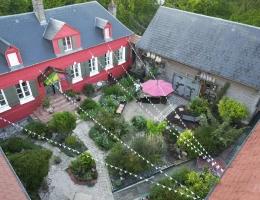
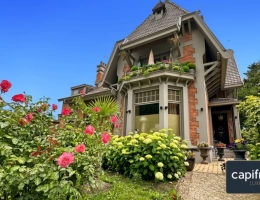
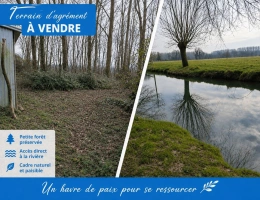
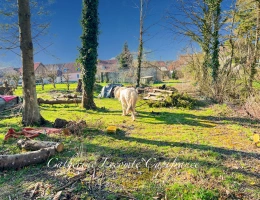
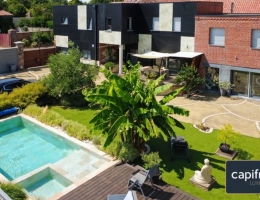
Are you looking for a dog kennel for sale in Hauts-de-France? The region pairs a large population with a long-standing dog culture and a ring of rural communes sitting close to its cities, which keeps boarding demand steady through the year. What comes on the market here ranges from a family kennel of a few boxes to a site combining boarding, a breeding business with pedigree puppies and a cattery. The listings are placed by owners retiring, rural agencies and notaries, and set out capacity, the nature of the buildings, the land and the dwelling house. They also appear among the dog kennels and boarding businesses for sale nationwide.
Beyond the listings, this page gathers what a buyer wants before viewing: country house prices across the region, the areas where boarding demand is best established, how to read the existing buildings and which licences to verify. To frame your project, our white paper « Créer une exploitation agricole » (in French) sets out the route from funding to legal status.
In most sales the dwelling house is the largest single item, ahead of the kennel buildings and the goodwill. According to our country house observatory, the median price of a house in a rural commune in Hauts-de-France stood at €175,000 in 2025 (+2.9% year on year), or €1,686/m² of living space, across 11,949 recorded sales. The national median is €189,200.
The rest of the value lies in what property figures never show: the number of heated boxes and their individual runs, the quality of the exercise paddocks, a treatment room, a laundry and an isolation unit, the space set aside for cats, and then the business itself — customer records, online booking, occupancy outside school holidays and how long the local reputation has been built. Place property values with our country house price observatory, then test your takeover plan using our financial calculators.
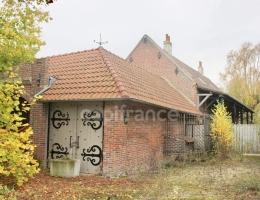
Many establishments here occupy former brick farmsteads or converted agricultural buildings, which gives generous volumes that are sometimes poorly insulated. On any site, examine the frame and roof, the floor and its drainage fall, the soundness of the partitions between boxes, heating and ventilation, the size of the individual runs and the fencing of the exercise paddocks. The water connection, the handling of wash-down effluent and the electrical supply available weigh heavily on the refurbishment budget. A well-kept site with washable floors and compliant boxes changes hands well above premises that need rebuilding from top to bottom.
Then look at what keeps the business running day to day: treatment and isolation room, quarantine kennel, a separate cattery with its own airflow, laundry, feed store, reception office and visitor parking. Where boarding is combined with a dog breeding business, the breeding stock, the whelping boxes and the kennel's record are valued apart from the buildings. On a property offered with a dwelling house and land, ask for a written split between the home, the professional facilities, the equipment and the goodwill: the three are neither valued nor financed in the same way.
Nord supplies the densest demand, driven by the Lille conurbation, the Lys valley, the Douai and Valenciennes areas: sites within half an hour of those centres see regular bookings, including outside the summer. Pas-de-Calais combines the hinterland of Béthune, Arras and Saint-Omer with the Côte d'Opale, where tourism and second homes create sharp seasonal peaks. The Somme works off Amiens, the Baie de Somme and the coastal road. The Oise benefits from its closeness to the Paris region, with owners used to boarding their animals over the holidays. The Aisne, more rural, relies on Saint-Quentin, Laon and Soissons.
That geography shapes both location and price. Near the larger cities land costs more but trade spreads evenly across the year; in the rural parts of the Aisne or the Picardy hinterland the entry cost falls and the customer base often has to be rebuilt, usually through a well-made booking site and steady local visibility. Check road access, the real driving time from the nearest conurbation and how many other boarding kennels operate within the same radius before you commit.
Any activity involving pets requires someone on site holding the ACACED, the French certificate of competence for keeping domestic animals, plus a declaration to the departmental directorate responsible for population protection. Above nine weaned dogs kept at once, the premises fall under the classified installations regime: declaration or authorisation depending on numbers, a prefectural order to read in full, and a change of operator to be notified. Ask for the receipt of declaration, the order, the veterinary inspection reports and the register of animals in and out. A takeover that skips this can end up with less authorised capacity than advertised.
The second issue is the neighbours. Noise is the leading source of dispute in this trade: measure the distance to the nearest dwellings, check the planning documents, ask the town hall about earlier complaints and confirm that the buildings' permitted use covers the activity. The orientation of the boxes, hedging, earth banks and acoustic insulation are easier to negotiate before purchase than after. Finally, have the seller spell out what the business being sold includes: customer base, trading name, current contracts, and a non-compete undertaking over a defined area.
Private sellers, rural estate agencies and notaries feed this page as new businesses reach the market. Narrow by department, capacity or budget, switch on an alert to receive new entries as they appear, and continue your search among the farms for sale in Hauts-de-France if a property with land would suit you.


