

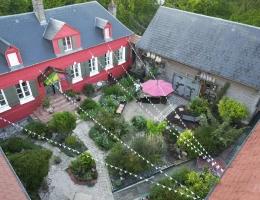
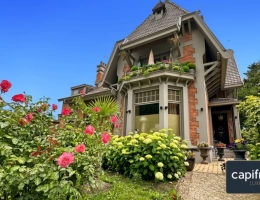
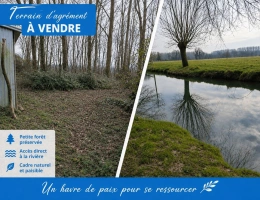
Taking over a dog kennel for sale in Pas-de-Calais means settling in one of the most densely populated departments in France, where demand for animal boarding never runs short. Between the former coalfield, the Côte d'Opale and the farmland of the Ternois, the businesses on the market range from a family kennel attached to a house to a professional site with a separate cattery. Operators arranging their retirement, rural property firms and notarial offices pass these files to us with the authorised headcount and the condition of the boxes set out. They are listed alongside the rest of our dog kennels and boarding businesses for sale.
What remains is everything an advert leaves out: where rural property prices actually sit in this department, which areas the bookings come from, how much life is left in the housing buildings, and how sound the paperwork is. If you are coming from another trade, our white paper « Créer une exploitation agricole » (in French) sets out the steps to getting established.
In most sales the dwelling house is the largest single item, ahead of the kennel buildings and the goodwill. According to our country house observatory, the median price of a house in a rural commune in Pas-de-Calais (62) stood at €186,000 in 2025 (+6.3% year on year), or €1,747/m² of living space, across 2,577 recorded sales. The national median is €189,200, against €175,000 across Hauts-de-France.
Beyond the house and the plot, what you pay for here is the working plant and the booking diary. Heated boxes, covered runs that stand up to wet and windy winters, well-drained exercise paddocks, a treatment room and a compliant quarantine kennel count for more than a generous but poorly arranged area. Then comes the business itself: how long the name has traded, whether the customer file really transfers, whether online booking is running, and how the site fills outside school holidays. Place the dwelling with our country house price observatory, then build your funding plan with our financial calculators.
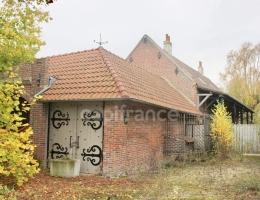
Many sites occupy old brick farms in the Ternois, the Artois or the Boulonnais, converted over the years. The roof covering, the timbers and the insulation of the night block therefore deserve as much scrutiny as the boxes, because the oceanic climate of this coast and its plateaux tests materials and calls for ventilation that clears damp without creating draughts. Look at the fall of the floors, the drainage of wash water, the run-off from paddocks on silty ground, and the height and burial depth of the fencing. A whelping room, a nursery for pedigree puppies or a cattery kept apart from the dogs are appraised separately.
The asking price covers four distinct things: the dwelling, the land, the working plant and the goodwill. Ask for them to be separated in the preliminary contract, and have the structures surveyed rather than reasoning from an overall floor area. Check the planning consent for each building, including canopies and shelters added along the way, and the capacity of the drainage system. Premises with tired fencing and unheated boxes imply refurbishment that is best costed before you negotiate.
Population density here creates a dense, fragmented catchment. The former mining belt, from Lens and Liévin to Hénin-Beaumont and Bruay-la-Buissière, together with Béthune and Arras, supplies steady year-round demand from households that often have flats or gardenless houses. On the Côte d'Opale, Calais, Boulogne-sur-Mer and Berck add a busy coastline; around Montreuil-sur-Mer and Le Touquet, second homes push bookings towards the holiday weeks. The Ternois, the Audomarois and the Sept-Vallées offer land within reach of those centres at gentler prices.
A site near a motorway junction catches holiday departures and last-minute drop-offs; away from the main routes, everything rests on reputation and word of mouth. Count the competitors already trading within half an hour before you commit, check what signage is permitted from the nearest main road, and establish whether occupancy rests on local regulars or only on the summer peaks.
Nothing passes automatically with the walls. The ACACED, the certificate of knowledge required in France to look after pet animals, belongs to a person and not to the premises. The declaration of activity to the departmental authority responsible for the protection of populations must be made again in the buyer's name, with entry and exit registers and an agreement with a designated veterinary surgeon. Above nine weaned dogs the site falls under the classified installations regime: declaration first, then prefectoral authorisation for larger numbers. Start, then, by reading the receipt or the prefectoral order and the headcount it allows.
Noise generates more disputes than smell, particularly where housing has crept up to a kennel built in open country. Check the distance to third-party dwellings, where the runs are placed, any planted screens and the acoustic treatment of the night building, then the zoning under the local planning document if you intend to extend. Have it confirmed that no neighbour dispute is running, and obtain the list of animals on site, the deposits already taken and the handover period agreed with the seller.
Owners handing over, agencies specialising in rural property and notaries practising locally supply this selection, where boarding kennels sit alongside a dog breeding business and buildings awaiting conversion. Sort by capacity, by budget or by the presence of living accommodation, switch on an email alert, and carry your search further through dog kennels for sale in Hauts-de-France.


