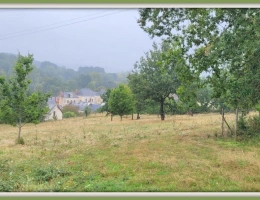
Buying a dog kennel for sale in Sarthe nearly always means taking on a complete rural property: a house, a kennel block built or converted over the years, exercise runs and land around them. The department lies within easy reach of Le Mans, where most of the boarding demand sits, yet keeps countryside affordable enough to place boxes well away from neighbours. Files come to us from owners handing over, from agencies specialising in rural property and from notarial offices; each one states the authorised headcount, the capacity and how the deal splits between dwelling and professional premises. They join our national selection of dog kennels and boarding businesses for sale.
Beyond the listings, this page gathers what you need to judge a deal in Sarthe: the level of rural property values, how customers divide between Le Mans, the Perche market towns and the Loir valley, the usual condition of the premises on offer, and the checks to run before signing. If you would rather start up than take over, our white paper « Créer une exploitation agricole » (in French) sets out each step.
In most sales the dwelling house is the largest single item, ahead of the kennel buildings and the goodwill. According to our country house observatory, the median price of a house in a rural commune in Sarthe (72) stood at €150,000 in 2025 (+4.2% year on year), or €1,512/m² of living space, across 2,742 recorded sales. The national benchmark is €189,200, the regional one (Pays de la Loire) €190,000.
Land weighs less here than the working tool and the booking diary. A buyer looks at how many boxes are genuinely usable, at soundproofing, at the heating of sleeping areas, at whether a separate cattery and an isolation box exist, and at the size of the exercise paddocks. Then comes the business itself: how steady occupancy stays outside school holidays, how old the client list is, how visible the site is online, what understanding has been built with local vets. Place the property share on our country house price observatory and test your funding plan with our financial calculators.
Most sites in the department occupy former farm volumes: a cattle shed turned into a kennel block, a barn closed in to shelter the boxes, an outbuilding converted into a laundry and feed store. The shell is usually sound, but the scrutiny falls on what was added afterwards: the nature and fall of the floors, where washing water goes, ventilation, the sound insulation of partitions, how well the heating copes in winter. The mild, damp climate wears materials slowly, yet keeps humidity high, and poor airflow quickly turns that into a health problem. Check fence lines too, and whether paddocks are double-fenced so dogs can be separated safely.
Then review the ancillary spaces that shape daily work: treatment room, quarantine kennel, parking that stays usable in wet weather, somewhere decent to receive owners. Where the dwelling house forms part of the sale, as it normally does here, it takes up much of the asking price. Insist on a written split between house, professional buildings, equipment and goodwill: that breakdown will drive your funding and your tax position alike.
Le Mans and its ring of communes hold the largest share of pet owners in the department, and the businesses that trade well sit within a reasonable drive of the city, around Allonnes, Arnage, Yvré-l'Évêque or Ballon-Saint-Mars. Secondary hubs follow: La Flèche and Sablé-sur-Sarthe to the south-west, La Ferté-Bernard and Mamers to the north-east, Saint-Calais to the east. The motorway network linking the department to Paris, Nantes and Normandy brings passing custom and makes it easy to drop an animal off before a long weekend. Tourism plays a quieter part here than on the coast.
That geography dictates where to buy. Too close to the city, land costs more and neighbours press in; too far out, occupancy turns uneven and follows the school calendar. Buyers often even out the year with a second string — day care, dog training, grooming — which the population around Le Mans supports. Ask where the customers of recent seasons actually came from.
Whoever runs the activity must hold the ACACED, the French certificate of competence for keeping animals, and the premises must be registered with the departmental veterinary protection service, which issues a number that has to appear on any advert offering puppies. Above nine weaned dogs kept together, the site falls under the classified installations regime, with registration and then prefectoral authorisation for larger numbers, minimum distances from dwellings, noise limits and rules on washing water. A change of operator must be notified, and the existing order caps the headcount.
Check next that the local planning document allows animals to be kept on the plot, that what stands there matches the permits granted, and that the drainage takes the real load. Noise is the leading source of disputes: listen to the site on a busy day, note which houses lie downwind, and ask whether complaints have ever been lodged. Lastly, a boarding kennels business survives through its customers: negotiate a handover period with the seller and access to the booking records.
Very different situations sit side by side here: a kennel needing refurbishment, a registered breeding business, a boarding operation trading at full tilt, sometimes a cattery alongside. Properties are entrusted to us by private owners, rural agencies and notaries practising in the department. Narrow things down with the filters, keep an alert running, and carry the search on through dog kennels for sale in Pays de la Loire.