

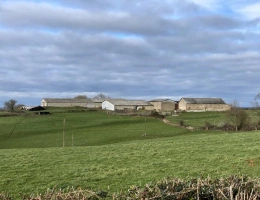
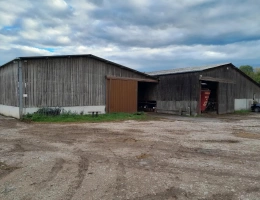

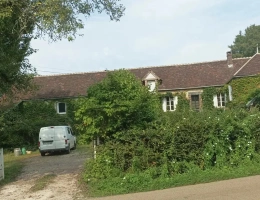
Buying a dog kennel for sale in Nièvre means choosing a thinly populated department where space is plentiful and where boarding premises sit easily at a comfortable distance from the nearest houses. What comes up ranges from a village property extended with a boarding block to Morvan farmsteads whose outbuildings now hold boxes, with the occasional breeding business. Owners retiring from the trade, agencies that specialise in this stretch of countryside and local notaries are the ones bringing such properties forward, stating the licensed capacity, the built area and what the goodwill covers. The national picture of dog kennels and boarding businesses for sale gives you a yardstick.
Beyond the listing itself, this page gathers what you need in order to decide: the level of rural property values in the department, where the customers actually come from, the building faults that prove expensive once the deed is signed, and the paperwork to request from the seller. If your plan is still taking shape, the white paper « Créer une exploitation agricole » (in French) sets out legal status, funding and timing.
In most sales the dwelling house is the largest single item, ahead of the kennel buildings and the goodwill. According to our country house observatory, the median price of a house in a rural commune in Nièvre (58) stood at €100,000 in 2025 (+7.8% year on year), or €1,064/m² of living space, across 1,370 recorded sales. The national benchmark is €189,200, the regional one (Bourgogne-Franche-Comté) €157,000.
On a business here, value rests less on the size of the plot than on the working tool: licensed capacity, the design of the boxes and their runs, the extent of the exercise paddocks, whether a laundry, a treatment room and an isolation kennel exist. The trade itself then weighs heavily, through the booking diary, the loyalty of owners and the word passed on by local veterinary practices. Place the residential part with our country house price observatory, then test the deal in our financial calculators.
A boarding block is judged first on what the yard does not show: where the wash water goes, whether the floors are sealed, and how sound the water supply and the wiring are. Then look at box size against the breeds taken in, the height of the partitions, the bedding arrangement and how easily a sick animal can be kept apart. Runs opening straight off each box spare a handling operation every time; paddocks are only worth having if they stay usable after a wet week. Sound roof timbers and a recent covering save an immediate outlay.
Many holdings come with the manager's house, an orchard and a few grass fields. Ask for a written breakdown of what the dwelling, the working buildings, the land and the goodwill each represent: tax treatment, lending and the seller's warranty do not follow the same rules across those items. Where a cattery rounds out the activity, price it separately, since its fittings and its seasonal pattern have little in common with the dog side. Vehicles, transport crates and the booking software deserve a line of their own.
The main source of bookings sits around Nevers and its suburbs, from Varennes-Vauzelles to Fourchambault, where pet owners happily drive a few minutes out into the countryside. The Loire valley, from La Charité-sur-Loire to Cosne-Cours-sur-Loire, also benefits from the main road down from the Paris region: a share of stays is booked by families heading to a weekend house. Decize and the south of the department bring more local but steady custom, resting on the small towns of the Bazois and the Allier valley. In the Morvan, around Château-Chinon and Lormes, demand turns markedly seasonal and depends on tourism.
That geography argues for thinking in driving time from the main roads rather than in distance: a signposted, easily reached site attracts owners who would never go looking for kennels at the end of a sunken lane. Ask the seller where the clients live, what share of stays falls in summer and what share is weekday care; those proportions explain annual takings far better than the stated number of places.
Visiting is no substitute for reading the file. Check that the activity is registered with the departmental service responsible for population protection, and that whoever is in charge of the animals holds the ACACED certificate of competence. Once numbers pass nine weaned dogs, classified installations rules come on top, with a regime that varies with the size of the site: obtain the receipt or the prefectural order, read the requirements on noise, effluent and setback distances, and prepare the notification of the change of operator. The movement register, veterinary follow-up and the carcass collection contract complete the review.
Noise is the sore point: kennels too close to housing lose any scope for extension and leave their operator explaining themselves at the town hall. Find out about past complaints, about the planning document in force and about existing hedges or acoustic screens. Legally, taking over such a business usually runs through a sale of goodwill: have the transferred contracts, the bookings already paid for and the commitments to staff listed in full.
Behind each offer stands either an owner selling on their own, a rural estate agency or a notary practising in the department. Set the filters to your budget, the capacity you need and the area, then put an alert in place: a well-placed business does not stay available long. You can also widen the search to dog kennels for sale in Bourgogne-Franche-Comté.