
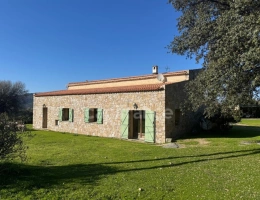
Finding a dog kennel for sale in Corse-du-Sud calls for patience: the department has few registered establishments and they rarely come up. Activity clusters around the gulf of Ajaccio, the Valinco and the far south between Porto-Vecchio and Bonifacio, where permanent residents and second-home owners are most numerous. What comes to market ranges from purpose-built boarding premises to a property with a handful of boxes, sometimes with a small breeding side or a cattery. Operators preparing a handover, island agencies and notarial offices pass us these files with the number of animals allowed, the condition of the buildings and the size of the plot. Browse them together with our dog kennels and boarding businesses for sale.
Beyond the advert, this page gathers what decides whether an island takeover works: value benchmarks for rural property in the department, how demand splits between the main town and the coast, the constraints specific to Corsican buildings, and the approvals that must be put in your own name. If you are coming from another trade, our « Créer une exploitation agricole » (in French) sets out the whole route to setting up.
In most sales the dwelling house is the largest single item, ahead of the kennel buildings and the goodwill. According to our country house observatory, the median price of a house in a rural commune in Corse-du-Sud (2A) stood at €500,000 in 2025 (+7.2% year on year), or €4,444/m² of living space, across 219 recorded sales. By way of reference, the figure is €189,200 nationally and €398,800 across Corse.
On an island where land near the coast trades dearly, the plot and the dwelling weigh heavily in the asking price, yet what you are really buying is a working facility and a customer base. Usable boxes, shaded runs, water storage, a treatment room, an isolation kennel, a separate cattery: each item is checked on site. Then comes the goodwill — booking diary, local standing, working relationships with vets. Place the house with our country house price observatory and test your assumptions with our financial calculators.
Summer shapes how the facilities are built: shaded runs, cross-ventilation, washable floors that do not radiate heat, plenty of drinking points and sleeping areas kept cool. Water deserves particular scrutiny, because washing down the boxes daily uses a great deal of it and summer restrictions are common: borehole, storage tank, mains connection — check all of it before offering. Then look at the roofs, the drainage of wash water, the private treatment system, the fencing and the gates. A treatment room, a properly sized laundry and an isolation area mark out premises built to last.
The number of boxes you can see says nothing about the headcount the authorities allow: have that limit confirmed in writing, since it caps what the business can do. Where a dwelling house and land are included, ask for the price to be split between home, land, working buildings, equipment and goodwill, because each is funded differently. Cost future works with the price of shipping materials and the availability of local trades in mind, factors that stretch building schedules here.
The Ajaccio conurbation, extending through Alata, Sarrola-Carcopino, Grosseto-Prugna and Porticcio, holds the largest permanent population and produces bookings right through the year. The far south around Porto-Vecchio, Figari and Bonifacio shows the opposite profile: very heavy summer visitor numbers, a large stock of second homes and trade concentrated into a few weeks. The Sartenais and the Valinco, from Propriano to Sartène, sit in between. The interior, from the Taravo to the Alta Rocca, is thinly populated: plots are cheaper and neighbours further off, but the customers are further off too.
Closeness to the airports and ferry ports matters: the conditions attached to carrying animals by air and by sea lead some owners to board their dog rather than take it with them. Even so, judge a business on its occupancy outside the season rather than on full weeks in August. Ask for the monthly breakdown of nights sold over several years: it shows how much of the trade really comes from year-round residents.
The regulatory base does not pass with the walls. One person in charge must hold the ACACED certificate of competence, the activity is declared to the departmental directorate for the protection of populations, and the entry and exit registers and veterinary supervision must be taken up in the buyer's name. Above nine weaned dogs the premises fall under the classified installations regime, with requirements on distance from third-party dwellings, effluent handling and noise control. Ask for any prefectoral order in force and check that the animals actually housed match what was authorised.
Island planning adds filters of its own: coastal protection rules and the Corsican development plan restrict building in the strip near the shore, so an extension that looks obvious on paper may prove impossible. Ask the town hall about housing schemes nearby, since a new estate turns tolerated barking into a dispute worth avoiding. Finally, separate the sale of the business from the sale of the property, have the animals on site and the deposits already taken listed, and arrange a handover period with the seller.
Private sellers winding down, agencies based on the island and notaries feed this selection, from boarding kennels in operation to a property waiting to be converted. Sort by budget, by capacity or by whether a home is included, and set an alert so the occasional new listing reaches you. To widen the search, see dog kennels for sale in Corsica.