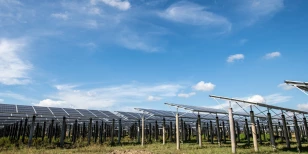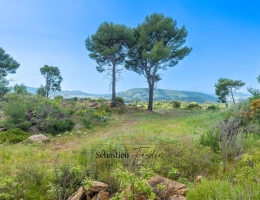
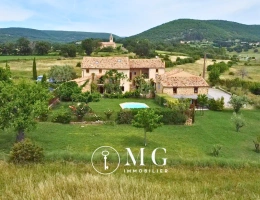
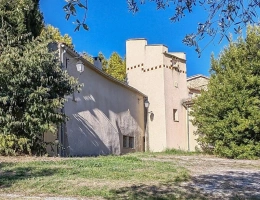
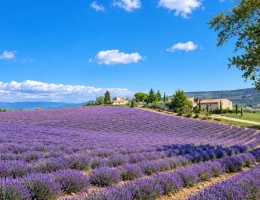
An orchard for sale in France's Provence-Alpes-Côte d'Azur is unlike any other: cherry trees on the hillsides, apricots in the Comtat, apples and pears along the Durance valley, peaches, almonds, olives and figs form a fruit mosaic made possible by the light and by irrigation water. The listings on this page come from growers organising their exit, from professionals who deal in Mediterranean farmland, and from notaries; they set out the layout of the plots, the species planted, the irrigation system and the protection equipment in place. They also appear in our nationwide selection of orchards for sale.
Buying here means knowing a few things the listing does not tell you: what planted land is worth in the region, which departments and valleys renew their supply, how to judge the condition of a Mediterranean orchard, and what to have checked before the deed. To build a setting-up project from end to end, turn to our white paper « Créer une exploitation agricole » (in French).
Land forms the base of the value of an orchard. DVF, the property sales database published by the French tax administration (vineyards excluded), records farmland changing hands in Provence-Alpes-Côte d'Azur at a median of €13,518/ha in 2025, average €14,884/ha, over 59 sales. Four sales in five fall between €5,947 and €23,101/ha; the national benchmark is €5,307/ha.
The SAFER benchmark completes the picture: €12,260/ha in 2025 for vacant land and pasture (+2.8% in a year, +12.5% in ten), against a national average of €6,460/ha, with let land trading some 17% below that.
Two orchards of the same size can be worth very different sums. What opens the gap: the nature and age of the plantings, the water right and the pressurised irrigation network, frost towers, hail netting, the shed and its cold store, the grading line, accommodation for seasonal pickers, and the trade built up with a cooperative, a shipper or a market clientele. Gauge land values through our land price observatory, then test your takeover assumptions in our financial calculators.
A visit starts with an inventory of the plots: species and varieties, rootstocks, spacing, training form, staking or trellising, the share of missing trees and overall vigour. Under this climate, water dominates everything else. An orchard connected to a gravity-fed canal or to a pressurised network, with a secured water share and a valid permit, is not worth the same as a planting that depends on a fragile borehole. Examine the declared resource, the irrigation kit, the drip lines and their upkeep, the storage basins and pumps, and the annual cost of water, which weighs lastingly on the margin.
Tree age then sets the pace of the years ahead. Cherries in full bearing, a well-managed apricot block or a recently renewed apple plot are worth far more than equivalent areas nearing the end of their cycle. Ask for planting dates plot by plot: they map out your grubbing-up schedule and the cash needed over coming seasons. Where the sale includes the farmhouse, the buildings and the land, ask for a clear split of values, since the dwelling and the production tool do not follow the same financing rules.
Spring frost is the Provençal grower's constant worry, and the measures taken are visible on the ground: frost towers, overhead sprinkling, heaters, candles stored in the shed. Hail netting and the rain covers used over cherries, which also prevent fruit splitting, are a heavy item whose age, tension and supporting structure must be checked. On the packing side, look at the bay, the grading line, hydrocooling or rapid chilling for cherries, the cold storage capacity and the electrical supply available, all of which decide the quality delivered as much as the price obtained.
A fruit-growing holding in this region is also judged on its labour and its trade. Cherry and apricot harvests rest on large seasonal teams, therefore on compliant accommodation and on a pool of returning pickers. Produce usually moves through a cooperative or a producer organisation, sometimes through shippers, sometimes through markets and farm-gate sales. Have the current commitments and contractual deliveries spelled out before you frame an offer.
Vaucluse (84) remains the regional powerhouse for fruit. The Comtat Venaissin, the slopes of Mont Ventoux, the Monts de Vaucluse and the plain around Carpentras and Cavaillon bring together cherries, apricots, apples, pears and table grapes, with a density of shippers and cooperatives that makes selling easier. The flip side is planted land that is sought after and rarely cheap. Bouches-du-Rhône (13) extends that basin along the Durance and into the Alpilles, between Saint-Rémy-de-Provence, Cavaillon and Châteaurenard, where irrigated orchards sit alongside market gardening, olive groves and protected crops, under strong urban pressure.
Alpes-de-Haute-Provence (04) offers valley fruit growing along the Durance and towards Manosque, where apples, pears, olives and almonds benefit from more affordable land and from structuring irrigation networks; the Valensole plateau and the Montagne de Lure frame these districts with dry crops and lavender. Hautes-Alpes (05) carries mountain apple production in the upper Durance valley, around Laragne, Tallard and Embrun, where altitude slows ripening and gives well-coloured fruit; an apple orchard rarely comes up for sale there, but entry prices are the most moderate in the region.
Var (83) mixes orchards, olive groves and vines, with fig plantings concentrated around Solliès-Pont, cherry blocks on the heights of the Haut-Var, and fruit growing that often complements another enterprise; the department's residential appeal pushes up built property far more than land. Alpes-Maritimes (06) is the most unusual case: very little farmland available, olives on terraces, citrus around Menton and small holdings geared to direct selling. A new entrant will find few opportunities there, but solid local outlets.
Begin with water again: the irrigation entitlement held through a water users' association, membership of a canal, the abstraction permit and the volumes allotted, together with the restrictions imposed in dry spells, which recur in this basin. Move on to plant health: sharka virus on stone fruit, cherry fruit fly and the compulsory control measures, spray records and the passports of recently planted trees. Finally, ask how the plots stand under the local planning document and where the no-treatment buffer zones near dwellings fall, since they eat into the workable area along the edges.
Legally, SAFER watches over planted land and the structures control, France's permit system for taking on a holding, applies to the handover. Separate the plots held outright from those occupied under a running tenancy, as the lease passes with the holding once the landlord agrees. Quality schemes, organic certification or official labels, are worth confirming with the certifying body, in particular the conversion period still to run.
The holdings shown on this page come from growers selling directly as well as from rural estate agencies and notaries, each setting out plantings, irrigation and buildings. Use the filters on area, species and budget to focus your search, then create an alert so you can follow new entries without checking back every day. And if your plans are broader, browse every farm for sale in Provence-Alpes-Côte d'Azur.