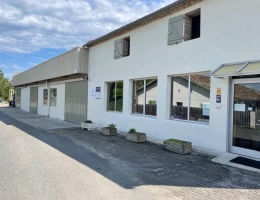
Looking for an orchard for sale in Occitanie means exploring one of southern France's great fruit-growing areas: apples and plums along the middle Garonne, apricots and peaches in the Roussillon, cherries on the hillsides, walnuts in the Quercy, kiwis and table grapes. The holdings shown here are entrusted to us by growers preparing their handover, by rural property professionals and by notaries; each listing sets out the species in place, when the trees went in, the irrigation and protection systems and the buildings included. They join the national selection of orchards for sale.
This page goes further than a catalogue of adverts: the value of regional farmland, the departments where handovers are most frequent, the condition of the plantations and of the packing facilities, and the checks specific to fruit and to water. If you are putting together a setting-up application, our white paper « Créer une exploitation agricole » (in French) describes the administrative and financial route in detail.
Land forms the base of the value of an orchard. DVF, the property sales database published by the French tax administration (vineyards excluded), records farmland changing hands in Occitanie at a median of €7,015/ha in 2025, average €7,653/ha, over 995 sales. Four sales in five fall between €3,913 and €11,825/ha; the national benchmark is €5,307/ha.
The SAFER benchmark completes the picture: €7,260/ha in 2025 for vacant land and pasture (-0.3% in a year, +6.1% in ten), against a national average of €6,460/ha, with let land trading some 17% below that.
On a fruit-growing business the hectare matters less than what grows on it and what surrounds it. Value is carried by the age and condition of the trees, the varietal choice measured against the market, secure access to irrigation water, the defences against hail and spring frost, and then the downstream chain: packing station, grader, refrigeration, storage capacity. Entitlements, delivery commitments and an established customer base add to that. To get your bearings, consult our land price observatory and our financial calculators.
Before any negotiation, have a plot-by-plot inventory drawn up: species, variety, rootstock, planting year, density, training system, proportion of missing trees. Two holdings of identical size are worth very different sums depending on whether they are entering their best bearing years or approaching replanting. A fruit farm fitted with hail netting, a recent micro-irrigation network and frost protection offers a security of harvest that is priced in, and rightly so in a climate where hailstorms and late frosts are ordinary risks rather than rare accidents.
The downstream side deserves as much attention as the orchard itself. Reception line, grader, bins, cold rooms, loading bay, tractors and sprayers form a whole whose age and compliance should be checked item by item. Where the property comes as a farmstead with house, sheds and land, insist on a price split between plantations, machinery, buildings and bare land: lenders reason line by line, and the write-off periods involved bear no comparison with one another.
Tarn-et-Garonne (82) leads regional output: apples, greengage plums, Chasselas table grapes around Moissac, kiwis, cherries and melons occupy the lower Tarn valley and the Garonne terraces, on holdings that are usually well equipped. Lot (46) combines walnut groves, plum trees and Quercy melons across its causses and valleys. Haute-Garonne (31) and Tarn (81) line their orchards along the Garonne, the Tarn and the Agout, alternating with irrigated arable land. In Gers (32), fruit growing stays marginal and generally forms part of diversified holdings.
On the Mediterranean side, Pyrénées-Orientales (66) is a leading stone fruit basin: apricot, peach and nectarine orchards on the Roussillon plain, early cherries on the Vallespir hillsides around Céret, all served by an old network of irrigation canals whose water rights deserve careful checking. Gard (30) extends the fruit-growing Rhône valley with apples, apricots, cherries and pears. Hérault (34) and Aude (11), largely given over to vines, keep scattered orchards, often on holdings where fruit complements the vineyard or the olive grove.
The mountain and foothill departments complete the picture with modest volumes but genuine openings. Ariège (09) and Hautes-Pyrénées (65) mainly offer small valley orchards, sometimes combined with livestock and well suited to direct selling. Aveyron (12) retains chestnut groves and hillside orchards along the Lot valley, while the altitude of Lozère (48) allows only limited planting. In these areas a family-scale fruit-growing holding sold with a dwelling house matches the market better than a specialised production tool.
Water is the first file to open. Where the resource comes from, membership of an irrigation association or connection to a collective network, the authorised volume, the charges, the state of the pumps and filters: in a Mediterranean climate, an orchard without solid water rights is not worth the asking price. Then examine the land framework: the structures control, the French authorisation regime for taking over farmland, notification to SAFER and its pre-emption right, rural leases that continue with the buyer subject to the landlord's agreement, and rights of way or irrigation easements, whether registered or merely tolerated.
On plant health, ask for the treatment records, an assessment of the trees with regard to plum pox, fire blight and fruit fly, and evidence that any compulsory control measures have been followed. Check too the planning consents for the farm buildings, the compliance of the sprayer filling and washing area, and, if the orchard is certified organic, the exact position of the commitments in force with the certifying body.
Harvesting fresh fruit remains highly manual: thinning, picking in several passes, sorting and filling bins call for large teams over short windows. An orchard business in Occitanie is therefore judged partly on its ability to house and retain seasonal workers, to draw on an employers' group and to sequence the work between early and late species. Ask the seller for the real working calendar of the last campaign, team by team, rather than a global estimate of labour needs.
The marketing route completes the picture: delivery to a cooperative or producer organisation, shipping, wholesale markets, pick-your-own or a producer shop. Each channel imposes its own grading, acceptance and logistics constraints. Plan ahead for the transfer of contracts and customer references, which never follow the signing of the deed automatically.
Sellers acting directly, rural property firms and notaries keep this Occitanie list supplied. Pick a department, a size range or a budget, set up an alert to follow new offers week by week, and extend your search among the farms for sale in Occitanie.