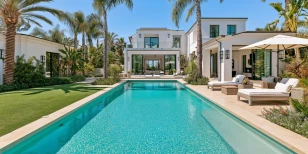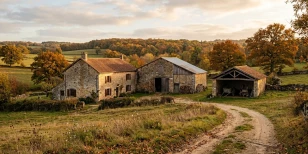
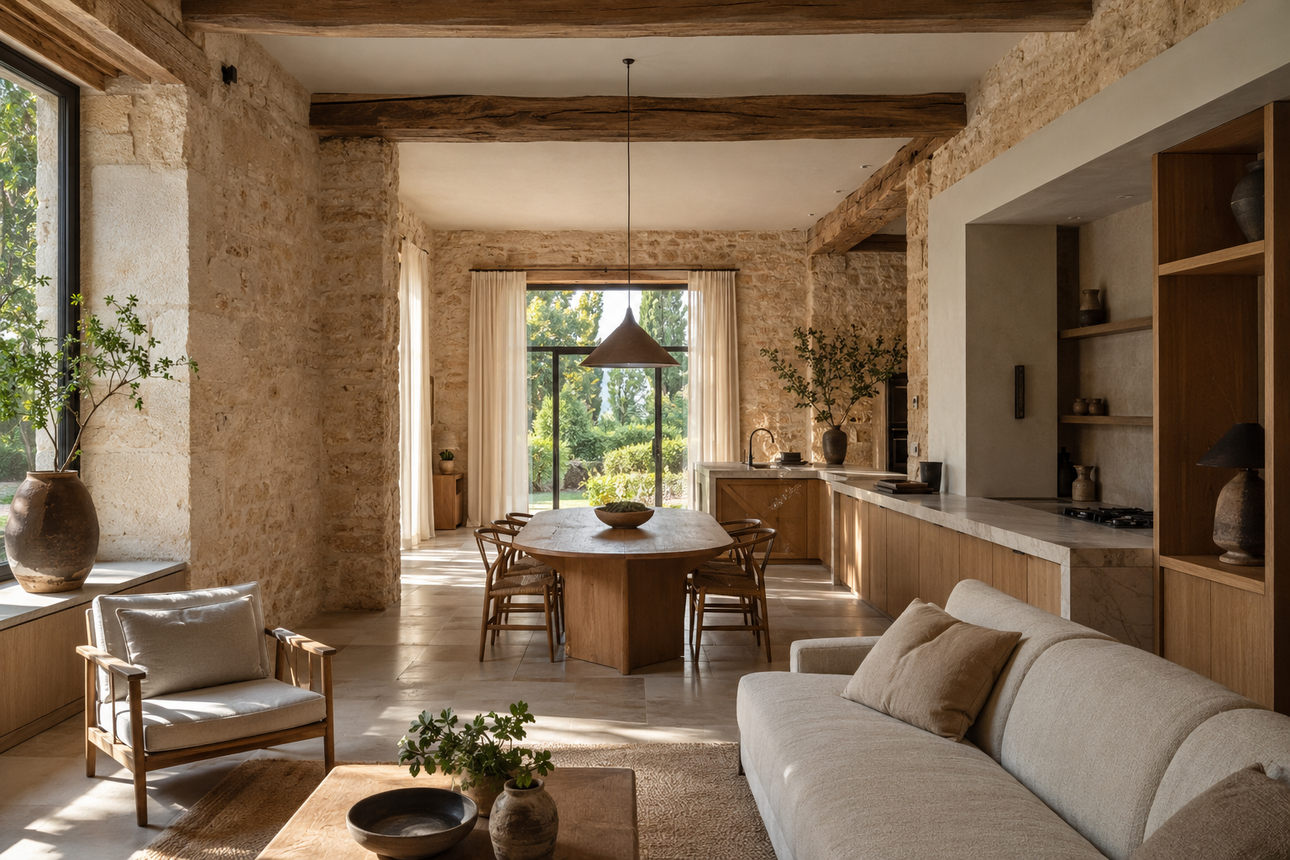
The value of a property does not depend solely on its location, its surface area or the quality of its buildings. During a viewing, perception is also shaped by volumes, light, materials and how easily future occupants can picture themselves living there.
High-end interior design can then reveal the potential of a character home, a former farmhouse, a manor house or a rural residence. It is not simply a matter of adding expensive decorative elements, but of designing an interior that is coherent, functional and respectful of the identity of the place.
A buyer naturally assesses the general condition of the property, but their impression also rests on less objective elements. Smooth circulation, well-integrated storage or a kitchen suited to the volumes can give the impression of a perfectly mastered property.
Conversely, a succession of poorly connected rooms, insufficient lighting or unsuitable fittings can give rise to doubts. The buyer then anticipates works, constraints and additional expenses, even when the building is sound.
High-end interior design helps reduce these reservations. It shows that the property has been thought through as a whole and maintained to a high standard. This impression of coherence strengthens confidence and makes it easier for buyers to picture themselves there.
In an old house or a rural property, the quality of an interior scheme rests first and foremost on its ability to engage in dialogue with the existing structure. Seeking to erase all traces of the past in favour of an entirely standardised interior can strip the property of part of its appeal.
Beams, stone walls, old floors, joinery and fireplaces are often distinctive features. They can be preserved and combined with more contemporary lines, provided a visual balance is maintained.
High-end quality is then recognisable in the precision of the junctions, the quality of the finishes and the accuracy of the proportions. Bespoke furniture can, for example, follow an irregular wall, make use of an old alcove or discreetly incorporate technical equipment. The intervention thus improves comfort without concealing the building's history.
Not all rooms play the same role in the perception of a property. To enhance a property's value, it is generally preferable to treat a few structuring spaces with care rather than multiplying superficial interventions.
The kitchen often occupies an important place in family homes, second homes and residences designed for entertaining. It must be pleasing to the eye, but also suited to everyday use and to the dimensions of the room.
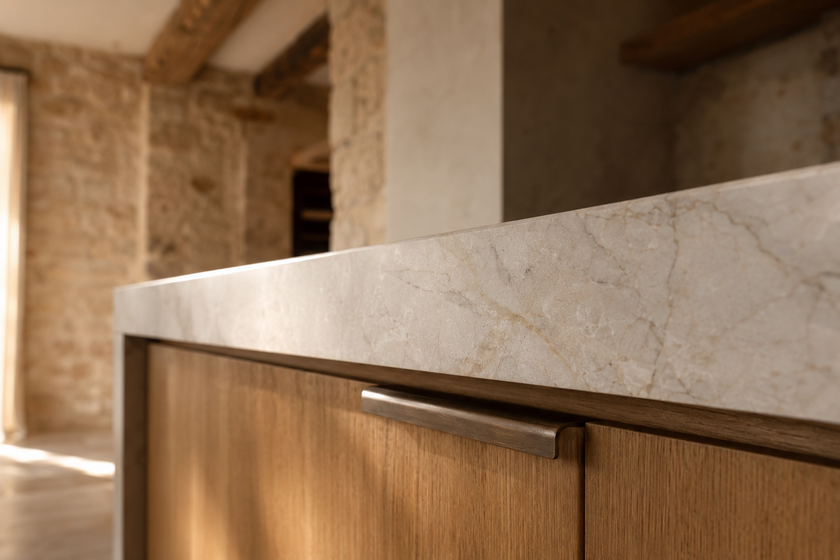
A successful layout takes into account movement, preparation areas, storage and the connections with the dining room or the outdoors. The fronts, worktops and handles are best chosen in keeping with the overall architecture, without necessarily reproducing a period style.
Character properties sometimes offer large surface areas but few genuinely practical storage spaces. Thick walls, sloping ceilings and unusual heights make standard furniture difficult to integrate.
Bookcases, dressing rooms or cupboards designed for the space make it possible to use these volumes without weighing them down. They also give a clear function to previously unused areas. This optimisation immediately improves the legibility and comfort of the home.
In a high-end bathroom, perceived quality depends less on an accumulation of fittings than on the coherence of the project. A fluid layout, materials suited to humidity, well-chosen taps and precise lighting produce a more lasting result than an overly pronounced fashion statement.
In an old house, mineral tones, treated wood or understated finishes make it possible to create a contemporary space without a jarring break from the rest of the property.
Light strongly influences the perception of volumes. Before undertaking major transformations, it can be useful to study how it moves through the house over the course of the day.
Wall colours, furniture placement and the treatment of openings may be enough to brighten a room. Artificial lighting should then complement natural light, with several sources distributed according to use.
Perspectives deserve the same attention. From the entrance, the eye should be drawn towards an interesting feature: an opening onto the garden, a fine fireplace, a staircase or a reception room. An overly dense layout can interrupt these lines and give an impression of reduced space.
A high-end positioning does not rest solely on immediate appearance. Materials must also age well and remain compatible with the constraints of the place.
Solid wood, stone, metal, glass or certain composite surfaces can be combined, provided the number of finishes is kept limited. A coherent palette gives the project more strength than a juxtaposition of spectacular materials.
Ease of maintenance also matters, particularly in a country residence, a guest house or a property occupied seasonally. A delicate material may be appropriate in a little-used area, but become a constraint on a worktop or in a heavily used room.
Some costly transformations do not necessarily improve a property's appeal. They can even complicate its resale when they reflect overly personal tastes.
Among the main mistakes to avoid:
A balanced project should remain personal enough to give the place an identity, while retaining a certain neutrality. The aim is not to design an impersonal interior, but to allow different buyer profiles to picture themselves living there.
High-end interior design does not mechanically guarantee a precise increase in the sale price. Its value lies above all in its ability to make the property's qualities immediately understandable.
A well-appointed property appears easier to live in, better maintained and more accomplished. It can also stand out from comparable properties that still require a complete rethink of their spaces.
The most relevant approach is therefore to start from the building, its uses and its identity. When every choice seems to belong naturally to the place, the interior design does not overshadow the property. It extends its qualities and helps create a lasting impression from the very first visit.