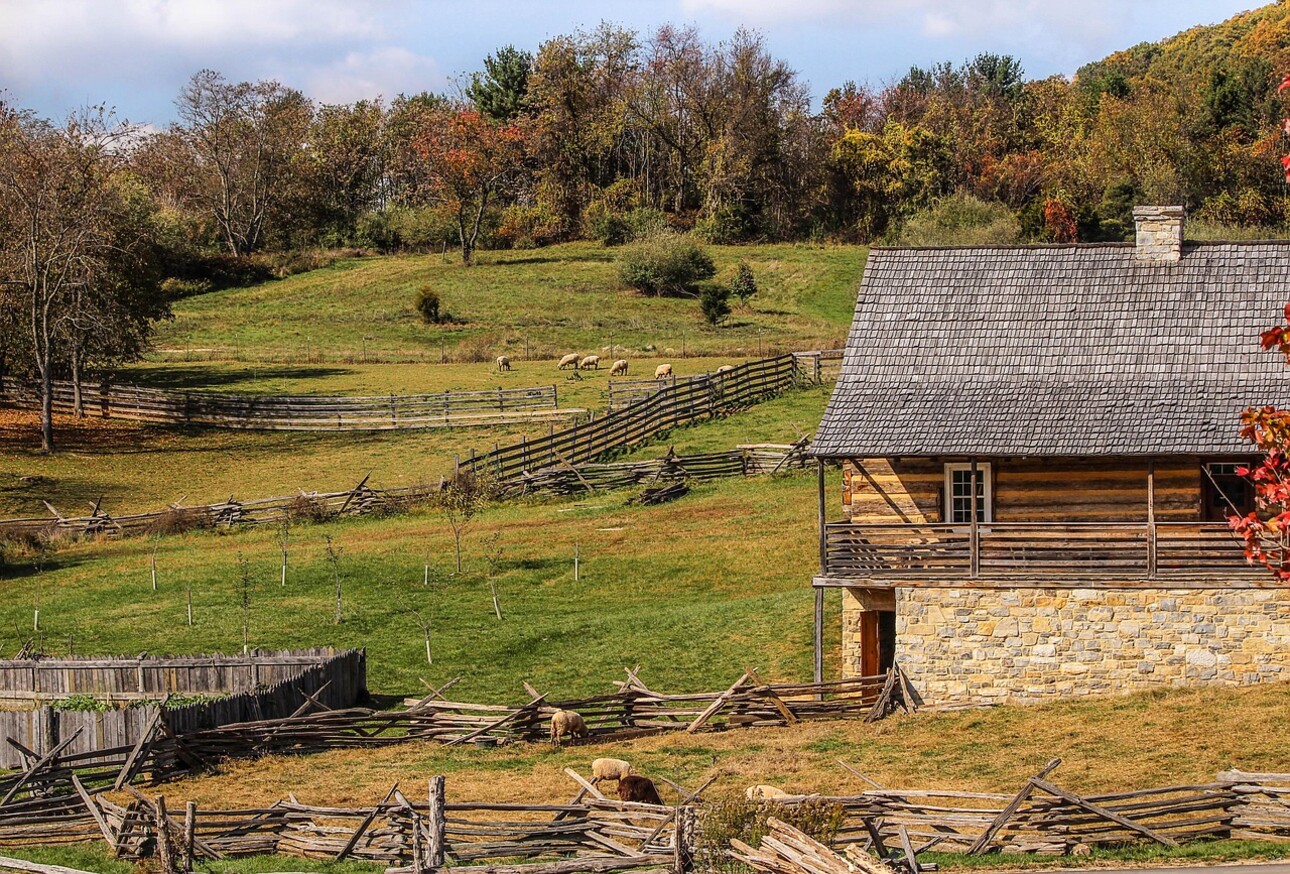
Buying a rural property, a farmhouse complex or a house with a few hectares of adjoining land is not the same as buying a house on a housing estate. The land may be subject to a right of way, leased to a farmer or covered by the SAFER's pre-emption right, and old buildings sometimes hide defects that a viewing does not reveal. None of this need stand in your way if you identify it before you commit. Below are the points to check, how the sale proceeds and the disputes that most often arise after the purchase.
The first question is simple: what can you do with this property? The local urban plan (PLU) or the municipal map (carte communale) places each plot in a zone (urban, future development, agricultural or natural). In agricultural or natural zones, the scope to build, extend or convert a building is tightly restricted. A barn cannot become a dwelling without planning permission, and only if the planning document allows it.
Before signing, ask the town hall for a planning certificate (certificat d'urbanisme) and have the intended use (holiday let, workshop, keeping horses, main residence) stated in the preliminary contract.
The plots next to the house do not all have the same status. Agricultural grassland, woodland or a pond are subject to different rules (taxation, pre-emption, upkeep): check their nature in the title deed.
Easements are common in the countryside: a right of way for a landlocked plot, a water pipe running across a meadow, a power line, rainwater drainage, a shared well. Not all of them appear in the most recent deed. Ask the notaire for the chain of title covering several past transfers, and ask the seller in writing about any rights of way used by third parties. Conversely, check that your own access to the public road is legally guaranteed and not merely tolerated.
The cadastral plan is a tax document and does not establish property boundaries. Only a boundary survey (bornage), carried out by a chartered surveyor (géomètre-expert) by agreement with the neighbours or, failing that, ordered by a court, fixes them with certainty. For land with unclear boundaries (hedges, ditches, fences that have been moved), requesting a survey before the sale avoids many disputes later on.
Roof timbers, roofing, stone walls without deep foundations, rising damp, private sewage system: a farmhouse complex often combines several major items of work. Have the work costed by a building professional before signing. To put the asking price in context, the country house price observatory gives benchmarks by area.
The seller must provide a technical survey file (dossier de diagnostic technique) annexed to the preliminary contract or the deed of sale. What it contains depends on the age of the building, its location and its equipment: energy performance (and an energy audit for homes rated E, F or G), lead, asbestos, electricity, gas, termites, a risk statement, and an inspection of the private sewage system where the house is not connected to mains drainage. The up-to-date list and the conditions for each survey are set out on the Service-Public page on property surveys required when selling. These surveys cover the residential part: barns and farm outbuildings are not always included.
If land is let to a farmer, the buyer takes over the lease as it stands. A rural lease (bail rural) runs for at least nine years, is in principle renewed automatically, and the owner can only end it in strictly defined cases. Insist on a copy of the lease, or a written statement from the seller confirming that there is no tenancy, including a verbal one: informally letting a neighbouring farmer use the land can be enough to create a rural lease.
Several parties may have priority over you. The sitting farm tenant has, under certain conditions, a right of pre-emption over the land they farm. The SAFER can pre-empt property used or intended for agriculture; once the notaire has notified it of the planned sale, it has two months to decide. The municipality may also hold an urban pre-emption right over plots in urban zones. The notaire clears these rights before the deed is signed, which governs the timetable of the sale.
When a purchase combines several of these risk factors (a lease in place, possible pre-emption, a disputed easement), it is worth having the preliminary contract reviewed before signing it. Buyers based in the Île-de-France region who are buying in the countryside often consult a property lawyer in Paris to check the wording of the conditions precedent and the seller's declarations, alongside the notaire's work.
The sale usually starts with a preliminary contract. In a unilateral promise to sell (promesse unilatérale), the seller undertakes to sell and the buyer has an option they are free to exercise or not, in return for an immobilisation fee. In a compromis de vente, both parties are bound.
A non-professional buyer of a residential property has a 10-day cooling-off period, starting the day after notification of the preliminary contract. During that time they can withdraw without giving a reason or paying a penalty. After that, the buyer is protected by the conditions precedent: obtaining the loan, no pre-emption, obtaining planning permission, no undisclosed easement. The more precise they are, the more useful they are.
Once pre-emption rights have been cleared and financing obtained, the notaire calls the parties to sign. Payment of the price, transfer of ownership and handover of the keys take place at signing.
Before the preliminary contract, gather:
Then have conditions precedent suited to your project written into the preliminary contract. The time spent on these checks always costs less than a dispute after the purchase.