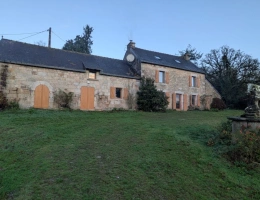
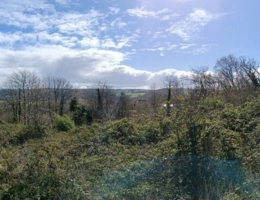
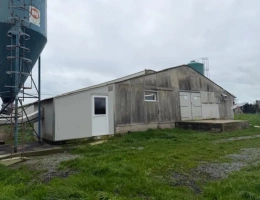
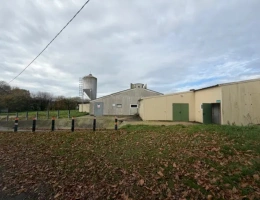
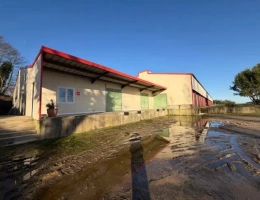
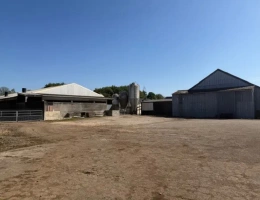
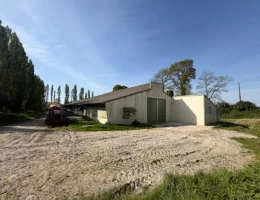
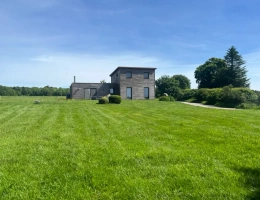
A dog kennel for sale in Brittany starts from a favourable position: dogs are widely kept in Breton households, the tourist season is long and many owners need somewhere reliable while they travel. The businesses on offer range from pure boarding sites to mixed kennels that also take cats, and dog breeding businesses registering their litters. Sellers are owners winding down, rural estate agencies and notaries, and their listings detail the number of pens, the floor areas, the land that comes with it and the regulatory position. They complete the national picture of dog kennels and boarding businesses for sale.
What you will find beyond the listings: price benchmarks for Breton rural property, the geography of demand across the four departments, the criteria for assessing facilities and the regulatory precautions worth taking. If your plan is to create a business on a property you buy, our white paper « Créer une exploitation agricole » (in French) lays out the stages of a full rural project.
In most sales the dwelling house is the largest single item, ahead of the kennel buildings and the goodwill. According to our country house observatory, the median price of a house in a rural commune in Bretagne stood at €210,000 in 2025 (+3.4% year on year), or €2,026/m² of living space, across 13,575 recorded sales. The national median is €189,200.
The price of a Breton site can be read through several items that do not move together. The facilities first: pens and runs, a treatment room, fenced play areas, an isolation unit, a cattery where feline boarding has been developed. Then the land, which buys peace with the neighbours. Then the business, on which immediate profitability depends: loyal customers, online booking, local visibility and the ability to fill outside the main holidays. Set the property element against the figures on our country house price observatory and build your funding with our financial calculators.
Brittany's damp, windy oceanic climate shapes how the buildings should be inspected. Roof watertightness comes first, then ventilation without draughts, floor surfaces and the disposal of washing water, which must be properly controlled. Concrete runs need enough fall and regular maintenance; grassed exercise paddocks cope badly with constant use and are best duplicated so they can be rested. Look at the quality of the fencing, whether there is a double gate, the acoustic separation between rows of pens, the presence of a treatment room and an isolation area, and the laundry and feed store.
Then comes the rest of the property: the dwelling house, sheds, and any former cattle buildings that might take an extension. Converting farm buildings is common in the region and is worth checking on the consents side. Have the house, the professional facilities and the goodwill valued separately, then compare with similar residential properties nearby. Boarding kennels whose buildings have already been brought into compliance cost more, but they spare you heavy spending in the first months of trading.
Ille-et-Vilaine offers the densest catchment, driven by Rennes and its growing urban area, and by Saint-Malo and its visitor traffic; sites near the routes into the Breton capital show the steadiest occupancy. Morbihan combines the Vannes and Lorient conurbations, a heavily visited coastline and a high share of second homes around the gulf, which produces sharp summer peaks and demand for short stays. These two departments are also where land is tightest, particularly within easy reach of the shore.
Finistère has a more stretched geography: Brest, Quimper and Morlaix structure demand, while the interior towards the Monts d'Arrée offers larger properties at contained prices, with neighbours further apart. Côtes-d'Armor sits in between, with a coastal strip from Saint-Brieuc to Lannion animated by tourism and second homes, and a rural centre where purchases remain affordable. Across the region, a strong hunting tradition and the place of the Breton spaniel also sustain demand for housing gun dogs.
Holding the ACACED certificate and declaring the activity to the departmental population protection directorate form the foundation: without them, neither boarding nor the sale of animals is lawful. Add to that a designated official veterinarian, properly kept registers, identification of every animal taken in and internal rules made available to clients. Crossing the classified installations threshold, defined by the number of weaned dogs on site, triggers a filing with the prefecture together with conditions on noise and discharges. Ask for those documents before making any offer.
Along the coast and in second-home areas, sensitivity to noise runs high and neighbour actions are more frequent than elsewhere: check the distance to dwellings, how long the business has been established, the acoustic screening in place and any history of complaints. Check too how the plot is zoned in the local plan, the state of the drainage and, where relevant, the constraints that come with proximity to the shoreline. Finally, a cattery or a mixed operation requires genuinely separate accommodation for cats, something rarely improvised after completion.
Private sellers, rural agencies and Breton notaries feed this page as their instructions come in. Sort by department, by budget or by capacity, keep an alert running to catch the next handover, and if a property to convert fits your plans, browse the farms for sale in Brittany too.