

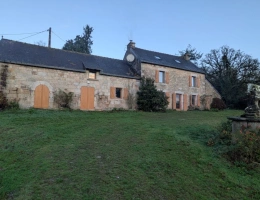
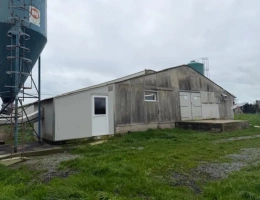
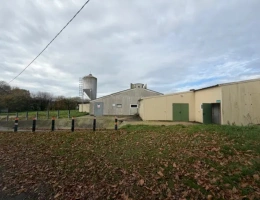
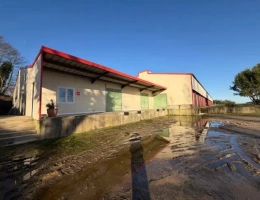
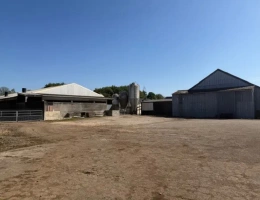
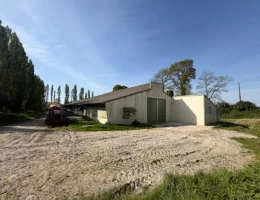
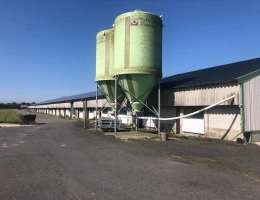
Hunting for an orchard for sale in Brittany means looking at a quiet but deeply rooted fruit-growing tradition, where the cider apple leads, alongside dessert orchards, soft fruit and a scattering of walnut plantings. The oceanic climate softens the late frosts that threaten apricot and peach growers elsewhere, but it brings wind exposure and heavy scab pressure. Growers handing over, rural agencies and notarial offices place the holdings you see here, setting out the age of the plantings, the varieties standing and the machinery included. All of them sit within the wider set of orchards for sale across the country.
Beyond the listings, this page gathers the benchmarks that are usually missing when a decision has to be made: what Breton farmland is worth, where the plantings cluster, which harvesting and storage equipment deserves a close look, and the checks particular to the fruit sector. If you are working towards setting up, our white paper « Créer une exploitation agricole » (in French) sets out the administrative and financial route step by step.
Land forms the base of the value of an orchard. DVF, the property sales database published by the French tax administration (vineyards excluded), records farmland changing hands in Bretagne at a median of €5,500/ha in 2025, average €5,803/ha, over 1,297 sales. Four sales in five fall between €3,510 and €8,658/ha; the national benchmark is €5,307/ha.
The SAFER benchmark completes the picture: €6,540/ha in 2025 for vacant land and pasture (+0.3% in a year, +16.8% in ten), against a national average of €6,460/ha, with let land trading some 17% below that.
Beyond the hectares, what you pay for in a Breton fruit farm is the age of the trees and the replanting schedule that goes with them: a young, trellised block on rootstocks suited to the soil bears no comparison with a planting at the end of its cycle. Then come the shed, the grader, the cold store, any borehole, and the goodwill of a farm shop where one exists. To place those figures in context, use our land price observatory and our financial calculators.
The first inspection is of the trees themselves: species and varieties standing, planting density, training system, trellising, rootstock vigour, and how complete and even the rows are. A large share of the Breton area is under cider apples, grown both as standard trees over grass and as intensive low-trained blocks, alongside dessert orchards combining apples, pears and, here and there, cherries or plums. An apple orchard at the end of its productive life is really being sold for its land, since grubbing has to be paid for and several seasons will pass before a full crop. Recent, irrigated plantings pull the asking price the other way.
Next comes the equipment: shed, workshop, loading bay, cold store and sometimes controlled atmosphere, grading line, straddle tractor, trays and bins. Protection matters just as much, even though hail worries growers less here than in the Rhône valley: windbreaks, bocage hedges and hail netting feed straight into the value. Where the sale takes in a dwelling house, accommodation for seasonal workers and unplanted land, ask for an item-by-item breakdown rather than a single figure, because these assets do not depreciate on the same basis.
Finistère (29) carries the strongest cider tradition, with the Cornouaille appellation and the Fouesnant country, where apple blocks sit beside vegetable fields and, around Plougastel, strawberry growing; the western end of the department is heavily exposed to prevailing winds, which makes shelter belts decisive rather than optional. Côtes-d'Armor (22) combines cider orchards in the Rance valley, around Pleudihen-sur-Rance and Dinan, with more scattered dessert orchards further inland; the Trégor, given over largely to vegetables, leaves little land free, and anything close to the coast stays tight, which pushes new entrants towards the inland communes.
Ille-et-Vilaine (35) owes much to its consumer base: Rennes and Saint-Malo feed the markets, the producer shops and pick-your-own, so holdings there often face the short supply chain, on land priced above the regional average and rarely released in large blocks. Morbihan (56) is more mixed, between the Vannes country and the Pontivy area, with cider orchards embedded in mixed cropping and livestock systems and a few soft fruit units; supply comes and goes with retirements, but land remains markedly more affordable than in Ille-et-Vilaine, which matters for a first purchase. Mixed holdings of this kind also spread the weather risk across several enterprises.
For anyone prospecting, these differences count for as much as the stated acreage. A buyer aiming at cider production under a quality scheme will look first at Finistère (29) and the fringes of Côtes-d'Armor (22); one building a plan around direct sales and pick-your-own is better served exploring Ille-et-Vilaine (35) and eastern Morbihan (56), even at a higher price per hectare. Handovers are scarce along the coast, where competition for land eats into available areas, and more frequent inland. Widening the search across two neighbouring departments remains, in practice, the surest route to a holding that fits the plan.
The value of a fruit-growing holding in Brittany turns closely on its outlet. Part of the apple area supplies regional cider makers under multi-year supply contracts, within the Breton geographical indications or the Cornouaille appellation, which secures income but constrains both the varieties planted and the replanting schedule. Other holdings belong to a producer organisation that handles packing and marketing. The buyer checks how long the commitments still run, the contracted volumes, the transfer conditions and the organisation's policy before making an offer, because these terms cannot always be renegotiated on a change of hands.
The short supply chain is the other side of the market: farm gate sales, weekly markets, producer shops, boxes, pick-your-own and processing into juice, cider or compote. Those activities create goodwill, with a customer base and sometimes a health approval, which is valued separately from the trees and the buildings. Organic conversion, well established in the region, adds real value but means checking where the conversion period stands and what was sprayed over recent seasons. Ask for the spray records as a matter of course; they tell you more than any sales pitch.
Legally, taking over a fruit holding goes through the structures control, the French authorisation regime governing access to farmland, and may run into SAFER's pre-emption right. Where parcels are rented, the rural lease carries on with the new farmer, subject to the required consents, and plantings made by the tenant give rise to compensation at the end of the lease: settle that point before signature. On water, any borehole and any abstraction for irrigation is subject to declaration or authorisation, so ask for the prefectural orders and check the volumes actually permitted.
The health of the orchard governs everything else. Have the missing trees counted row by row, look at the trunks and main limbs, and question the seller about scab, rosy apple aphid, voles and fireblight, which hits pears hardest. Distances from houses and public places restrict spraying along the margins, a sensitive matter in bocage country where dwellings are widely scattered. Finally, employing seasonal labour requires compliant accommodation and planning well ahead; have the plantings assessed by an independent expert rather than relying on the seller's description alone.
These holdings reach the market sometimes straight from the grower, sometimes through rural estate agencies or notarial offices in western France. Narrow the results by planted area, budget or species, switch on an alert so new listings reach you as they appear, and carry your search across to the farms for sale in Brittany.


